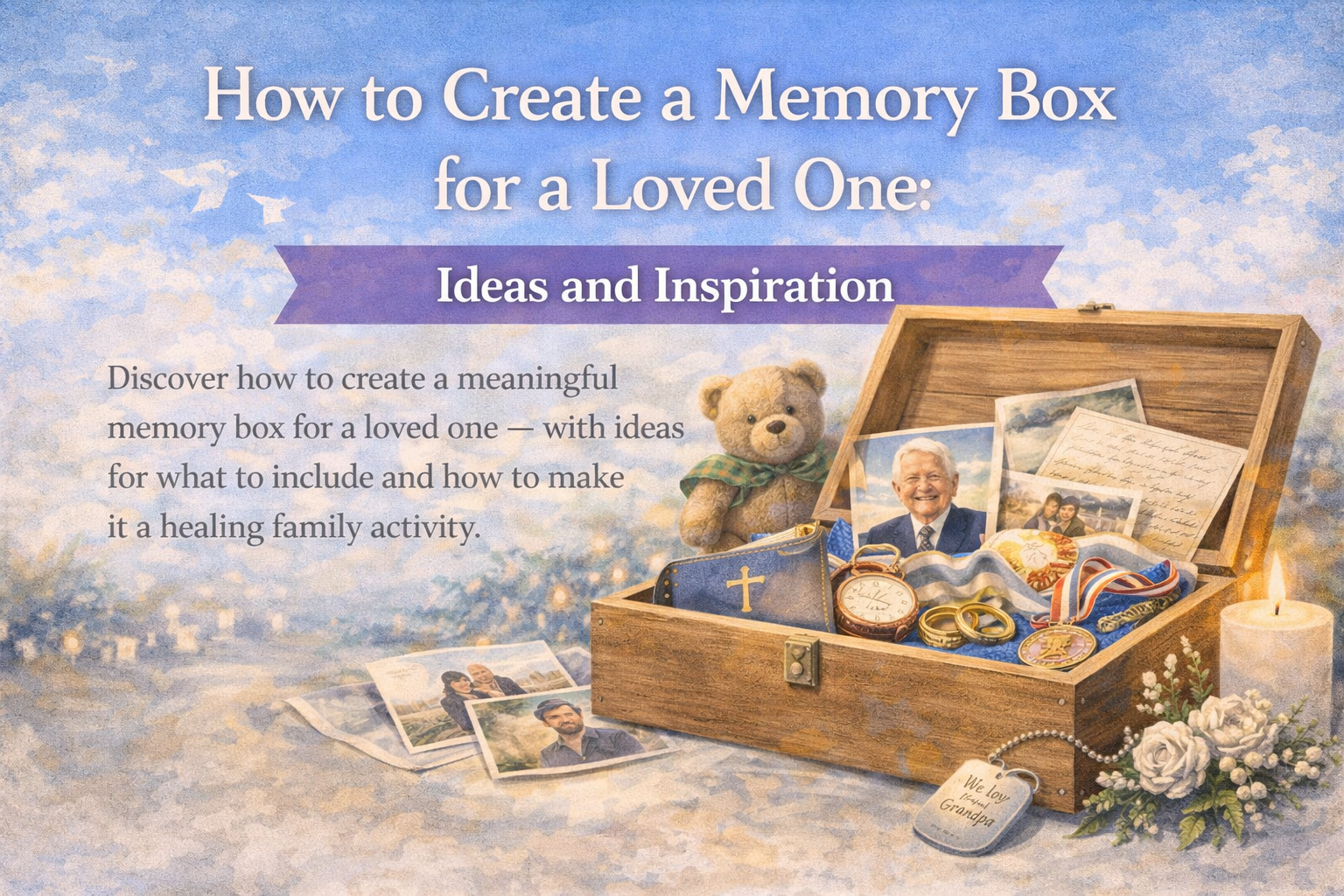
Grief, at its most acute, can feel entirely abstract — a weight without shape, a pain without location. One of the most powerful antidotes to this abstraction is the physical: the tangible, holdable, smell-able objects that connect us to the person we have lost. A memory box is a way of gathering those physical connections into a single, treasured object — a container for a life, held in the hands, opened on the anniversaries and ordinary days when the need to feel close is strongest.
Creating a memory box is also one of the most healing activities available to a grieving person or family. The act of gathering — deciding what matters, collecting mementos, discussing their significance — is a form of storytelling, a way of actively engaging with the life and legacy of the person who has died rather than being passively overwhelmed by the loss. This guide covers what a memory box is, what to put inside it, how to make the creation process meaningful, and how to connect it to a lasting digital memorial.
What Is a Memory Box?
A memory box — also called a keepsake box or legacy box — is a curated collection of objects, photographs, and mementos that capture the essence of a person's life. It is both a grief ritual and a lasting keepsake: something physical that families can hold, open, and return to across the years. Unlike a digital memorial, which exists in the virtual world, a memory box occupies physical space in the home. It can be taken down from the shelf, opened, and handled — engaging the senses of touch and smell in ways that screens cannot.
Memory boxes are used in many contexts: as part of organised grief support programmes, as keepsakes following a miscarriage or stillbirth, for children who have lost a parent, for families who have lost an elderly relative, and for anyone who wants a physical anchor for their grief and their remembrance.
Choosing the Box
The container matters. Choose something that feels appropriate to the person being remembered — their style, their aesthetic, the level of formality that feels right. Options include:
- A wooden keepsake box — natural, durable, and traditional; can be personalised with engraved names or dates
- A decorative tin or vintage box — may already hold personal significance if it belonged to the deceased
- A fabric-covered archival box — protective of paper and photographs, and available in a range of colours and designs
- A simple hatbox or shoebox — the container matters less than the contents; a beautifully decorated cardboard box can be just as meaningful
- The deceased's own container — a sewing box they used, a briefcase they carried, a jewellery box from their dressing table — these carry their own layer of association and meaning
What to Put Inside: Ideas by Category
Photographs
Photographs are typically the most important contents of a memory box. Choose prints that represent different chapters of the person's life — a childhood photograph, a young adult image, a wedding photograph, a candid family moment, a recent portrait. Photograph selection is in itself a meaningful act: deciding which images best capture who they were, which moments deserved to be immortalised, what the family most wants to carry forward.
Consider including a favourite portrait large enough to be visible when the box is opened — a face that greets you when you return to the box.
Written Words and Handwriting
The handwriting of someone who has died carries an extraordinary weight. Even a mundane piece of writing — a shopping list, a birthday card, a recipe in their hand — becomes precious. Look through old cards, letters, notebooks, and diaries. A single page of handwriting, placed in the box, preserves something irreplaceable: not just the words but the physical trace of their hand moving across paper.
Also consider including printed copies of significant written tributes: the eulogy delivered at the service, standout messages from the memorial guestbook, a letter written by the family as a collective goodbye.
Sensory Objects
Some of the most powerful objects in a memory box are those that engage the senses beyond sight:
- A small piece of fabric — cut from a favourite item of clothing; a shirt they always wore, a scarf they loved
- A bottle of their perfume or aftershave — scent is the most powerful trigger of memory and can bring a person back with startling immediacy
- A stone or shell from a place they loved — collected from a beach they visited every year, or from the garden they tended
- A pressed flower — from the funeral, from the garden, from a vase at the hospital
- A small item they always carried — a pocket watch, a keyring, a small ornament from their desk
Objects That Represent Their Passions
A memory box should reflect who the person was beyond their role in the family. Include small objects that represent their hobbies, interests, and passions:
- A golf ball or team badge for the sports lover
- A seed packet from the gardener's collection
- A guitar pick or a cassette of their favourite music
- A recipe card from the person who loved to cook
- A small book or a bookmark from the reader
- A paint brush, a pencil, or a sketchbook page from the artist
Documents and Records
Some families include copies of significant documents that form part of the person's story: a marriage certificate, a military discharge document, a citizenship certificate, a photograph of a diploma. These official records anchor the personal mementos in the historical and social context of the life that was lived.
Making Memory Box Creation a Family Activity
One of the most beautiful ways to use the memory box as a grief ritual is to create it collectively, as a family activity. Gather family members — including children, who benefit particularly from this kind of structured, purposeful engagement with their grief — and invite each person to contribute one object and explain why they chose it.
The stories that emerge from this process are often more precious than the objects themselves. The granddaughter who brings a recipe card tells the story of Sunday afternoons in the kitchen. The son who brings a matchday programme tells the story of thirty years of shared Saturday mornings. The spouse who brings a worn photograph tells the story of a life together. These narratives, gathered in the act of filling the box, become the living memory of a person — and they often surface stories that other family members had never heard.
Connecting the Memory Box to the Digital Memorial
A memory box and an online memorial page complement each other beautifully. The memory box holds the physical; the digital memorial holds the visual and the narrative. Photographs included in the memory box can be uploaded to the memorial gallery. Objects in the box can be photographed and included in timeline entries with their stories attached. Messages written during the box-creation session can be posted to the guestbook.
The QR code for the memorial page can be printed and placed inside the memory box itself — so that anyone who opens the box can also access the full digital tribute with a simple scan. Together, the physical and the digital create a memorial that engages all the dimensions of a person's life: the touchable past and the accessible forever.