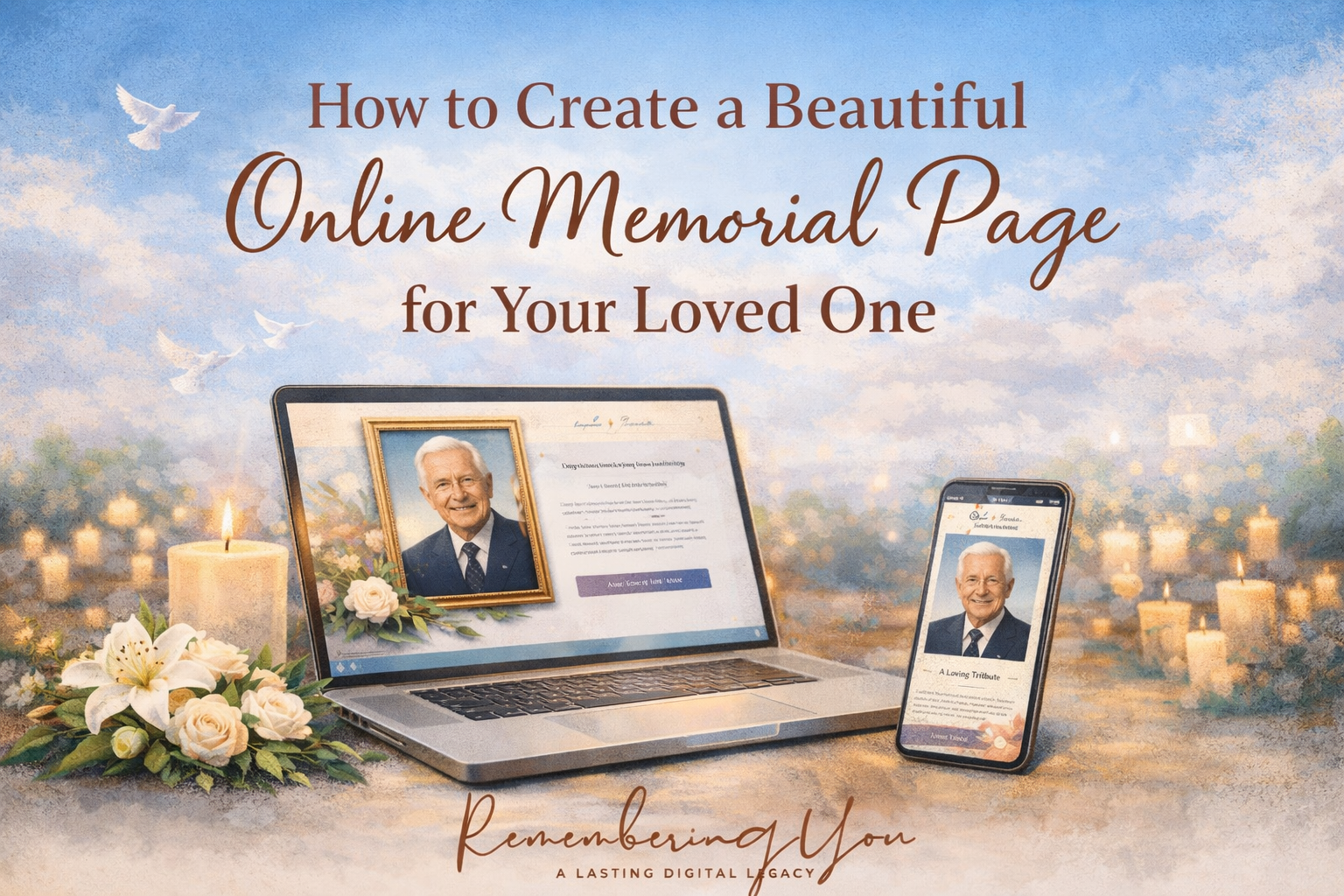
When we lose someone we love, the desire to preserve their memory is instinctive and profound. We find ourselves reaching for old photograph albums, replaying voicemails, reading old messages — searching for evidence that they were here, that they lived fully, that they mattered. An online memorial page offers something more lasting than a social media tribute post and more accessible than a physical headstone: a permanent, beautiful space dedicated entirely to celebrating and honouring one life.
This guide walks you through exactly what goes into a meaningful online memorial, how to create one step by step, and how to keep it alive for the years and decades ahead.
Why an Online Memorial Page Matters
Unlike a physical headstone limited by geography and weather, a digital memorial grows richer over time. Family members can add photographs, write new stories, and leave messages on anniversaries and birthdays long after the funeral is over. Extended family and friends who could not attend the service can still leave their condolences, share memories, and feel connected to the community of grief and love that surrounds your loved one's passing.
Online memorials also serve future generations. Grandchildren who are too young to remember, great-grandchildren who were not yet born — all of them will one day be able to visit the page and meet their ancestor through the photographs and stories collected there. A well-built memorial page is, in a very real sense, a gift to the future.
Unlike social media platforms, which are built for the living and change their terms of service over time, a dedicated memorial page is purpose-built for remembrance. There are no algorithms, no advertisements, no unrelated content to compete with. Just a quiet, dignified space where the story of one life can be told in full.
What Makes a Great Online Memorial
The best online memorials share a few key qualities. They feel personal and specific — full of the particular details that made the person who they were — rather than generic. They are rich with visual content, because photographs are the most immediate way to bring a person back to life for those who loved them. And they are accessible, welcoming contributions from family members of all ages and technical abilities.
The essential elements of a great online memorial include:
- A compelling cover photograph — a favourite portrait or candid moment that captures their spirit and welcomes every visitor to the page
- A full biographical summary — key facts and a written tribute that gives newcomers the essential picture of who this person was
- A detailed life timeline — structured milestones from birth to their final chapter, providing context and narrative
- A photo and video gallery — the visual heart of the memorial, preserving precious moments across the full span of their life
- A guestbook — giving friends and extended family a voice and a place to contribute their own memories
- Privacy controls — so the immediate family decides who can view the page and who can contribute content
- A unique URL and QR code — so the memorial can be easily shared at the funeral service and beyond
Step-by-Step: Creating Your First Memorial
Step 1 — Choose Your Platform
Begin by choosing a dedicated memorial platform rather than a general social media site. Dedicated platforms like Remembering You are built specifically for this purpose, with features designed for families: privacy controls, guestbooks, photo galleries, life timelines, and QR code generation. They are also more permanent — a memorial page on a dedicated platform is not vulnerable to a social media account being closed or changed.
Step 2 — Gather Your Materials
Before you start building, spend some time gathering the photographs, videos, and biographical details you want to include. Ask other family members to share their favourite photographs — you will be surprised how many images exist across different family members' phones and albums. Gather key dates: birthdate, birthplace, significant milestones, career history, marriage details, names and dates of birth for children and grandchildren.
Step 3 — Start with the Essentials
You do not need to complete the memorial in one sitting. Begin with the most essential information — name, dates, cover photograph, and a brief biographical paragraph. This creates a page that can be shared quickly and expanded later. Many families find it helpful to share a basic page at the time of the funeral service and then add more content over the following weeks as memories surface and family members contribute.
Step 4 — Build the Life Timeline
The timeline is one of the most powerful features of an online memorial because it transforms the page from a snapshot into a narrative. Add entries for birth, education, significant career milestones, marriage, the births of children and grandchildren, favourite travel memories, and any other chapters of their life that deserve to be remembered. Each entry can include a short description and a photograph.
Step 5 — Upload the Photo and Video Gallery
Start with your own collection, then actively invite family members to upload their own photographs. Span the full arc of their life — baby photographs, school years, young adulthood, family milestones, and later years. Include candid shots alongside formal portraits. The most treasured images are often the least posed ones — the moments caught at family gatherings, holidays, and ordinary days at home.
Step 6 — Invite Family to Contribute
One of the greatest gifts of an online memorial is that it can be built collectively. Share the link with family members and friends and invite them to upload photographs, write guestbook entries, and add timeline memories. You may discover stories about your loved one that you never knew — their life before you knew them, friendships and chapters of their story that existed independently of your own.
Step 7 — Share the Memorial URL and QR Code
Once the page is ready to be shared, distribute the unique URL and QR code widely. Include the QR code on the order of service at the funeral or memorial service. Share the link in your social media tribute post. Send it via email to extended family and friends. Consider having the QR code engraved on a graveside plaque so that anyone who visits the grave in future can instantly access the full memorial.
Keeping the Memory Alive Over Time
An online memorial is not something you build once and forget. The most meaningful pages grow over time. Make it a habit to return on birthdays and on the anniversary of the passing to light a virtual candle, leave a new message, or add a recently discovered photograph. Encourage family members to do the same. Over time, these small, regular acts of remembrance build a living portrait of a person truly loved — one that will grow richer with every passing year.
For families with children, the memorial page can become a way of keeping a grandparent or great-grandparent present in their lives. Visiting the page together, reading the timeline entries, and looking at the photographs gives young children a way of knowing someone they may be too young to remember clearly, or someone who died before they were born.
A life well lived deserves to be remembered in full. An online memorial page makes that possible — not just for those who grieve today, but for every generation that will carry that love forward into the future.