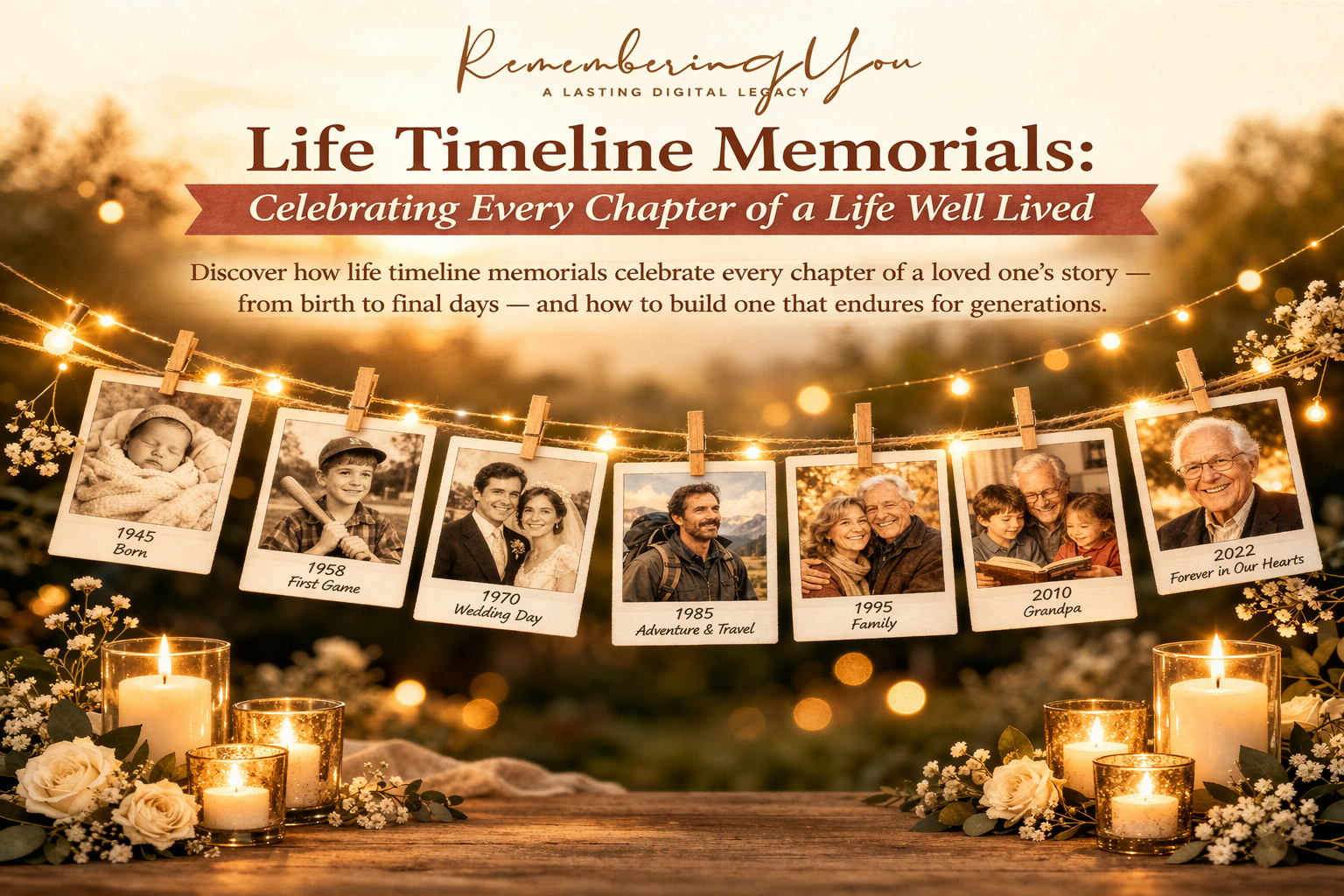
A life is not a single moment. It is not the date of birth and the date of death carved on a headstone. A life is a rich, layered, sometimes contradictory tapestry of chapters — each one complete in itself, each one shaped by the ones before it. The childhood adventures that formed the adult. The education that opened unexpected doors. The romantic story that defined the middle years. The career that gave purpose. The family that gave meaning. The passions and hobbies that gave joy.
A life timeline memorial is a way of honouring the full story — not just the milestones but the moments between them, not just the public achievements but the private joys and quiet loves that made the person who they were. This guide explores what to include in a life timeline, how to build one on an online memorial page, and why timelines are one of the most powerful features in modern memorial design.
Why a Timeline Transforms a Memorial
Without a timeline, an online memorial can feel like a collection of disconnected elements — photographs without context, a biography without narrative. A timeline changes this entirely. It transforms the memorial from a photograph album into a story, giving every photograph, every biographical detail, and every guestbook entry a place within the larger arc of the person's life.
For visitors to the memorial — particularly those who knew the person in only one chapter of their life — the timeline provides the missing context. The former colleague who knew your father only in his career years discovers, through the timeline, the childhood immigrant story that preceded it. The grandchildren discover the young person their grandparent was before the role of "grandparent" existed. The childhood friend rediscovers the person after decades of lost contact. The timeline makes these discoveries possible.
What to Include in a Life Timeline
Birth and Early Childhood
Begin at the beginning. Include the date and place of birth, and where possible, the circumstances of the birth — the decade, the country, the political and social context of the time. A person born in wartime, or in a country they would later emigrate from, or into a family with a remarkable story of their own — these facts give depth and perspective to everything that follows. Add a photograph if one exists from childhood, even a faded, slightly blurred print gives the entry visual warmth.
Schooling and Education
Include the schools attended, the qualifications gained, and any particularly formative educational experiences. Did they win a prize that set their career path? Discover a love of literature in a particular class? Meet a lifelong friend in the school playground? The educational chapter is often where the adult character first begins to emerge, and it deserves more than a perfunctory mention.
Early Adulthood and Career Beginnings
The transition into adult life — first job, first home, first real taste of independence — is often one of the most vivid chapters in a person's memory. Include the career path: not just the eventual title but the early steps, the entry-level jobs, the moments of doubt and decision that led to the career they would eventually build. This section often includes some of the best stories: the chance encounter that led to a lifelong vocation, the risk taken that changed everything, the failure that ultimately redirected to something better.
Relationships and Family
Include the story of significant relationships — how they met their partner, the arc of that relationship, the family built. The births of children and grandchildren are among the most significant milestones in most people's lives and deserve entries of their own, each with a photograph if possible. Do not shy away from complexity: second marriages, blended families, and complicated family structures are part of many lives and can be acknowledged with care and respect.
Career Achievements and Community Contributions
The career chapter of a timeline should go beyond job titles to capture what the person built, achieved, and contributed. Did they mentor younger colleagues? Build something from nothing? Serve their community? Hold a position that required sacrifice? Career achievements, when framed as contributions rather than credentials, become a meaningful part of the story.
Hobbies, Passions, and the Life Outside Work
The things a person did for love rather than income are often the truest expression of who they were. Include entries for significant hobbies and passions: the garden tended for thirty years, the amateur dramatic society, the Sunday morning golf game, the lifelong commitment to a particular sports club, the faith community that shaped their values. These entries, often accompanied by photographs of the person doing what they loved, are frequently the ones that resonate most deeply with visitors to the memorial.
Significant Travel and Life Experiences
Journeys and travel experiences often mark turning points or define chapters of a life. Include significant trips, emigrations, or relocations that shaped the person. The year they spent living abroad that changed their perspective. The family holiday that became an annual tradition. The trip of a lifetime taken in retirement.
The Final Chapter
The final years, and the circumstances of the death, are part of the story too. This section can be as brief or as detailed as the family chooses. It might simply acknowledge the illness or decline that preceded the death, the love and care that surrounded the final period, and the manner of the passing. Many families find that including a final timeline entry is part of the process of accepting and honouring the full arc of the life.
How to Build a Timeline on Remembering You
The Remembering You platform includes a dedicated life timeline feature that makes building a visual, engaging timeline straightforward. Add entries in any order — the platform arranges them chronologically. Include a heading, a description, and a photograph for each entry. The result is a beautifully laid-out narrative that visitors can scroll through at their own pace.
You do not need to complete the timeline before making the page public. Many families start with a few key entries — birth, marriage, death — and add more over time as memories surface and family members contribute. The timeline can grow indefinitely, becoming richer and more complete with every addition.
A timeline is one of the most important gifts you can leave for the generations that follow. It transforms a memorial from a photograph of a moment into the full story of a life — and every life fully lived deserves to have its story told in full.