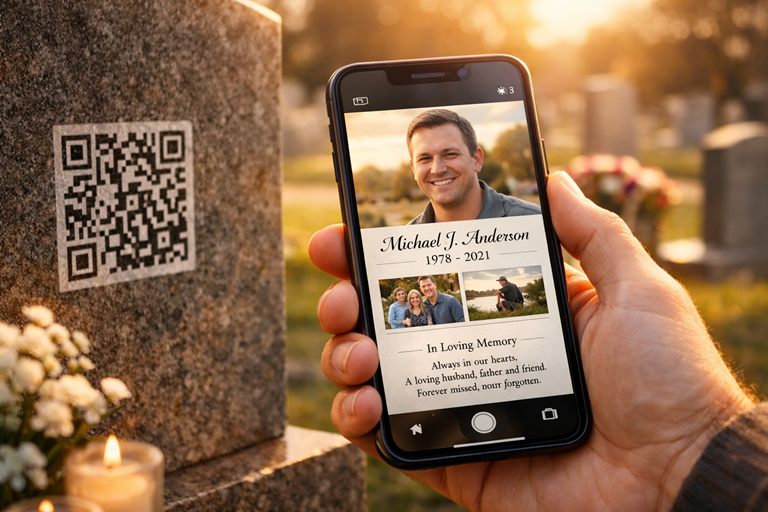
Losing a loved one is one of life's most profound experiences. In those first weeks and months of grief, many families find themselves wanting desperately to hold on — to preserve every photo, every story, every memory before it fades. In an age where connection increasingly happens online, QR code memorials are quietly transforming the way families preserve, share, and celebrate the lives of those they have lost. They bridge the physical world of headstones and graveside visits with the limitless space of the digital world, creating something that earlier generations could only have dreamed of.
If you have ever scanned a QR code on a menu or a poster and wondered whether the same technology could serve a deeper purpose, the answer is a quiet and powerful yes. QR code memorials are growing in popularity around the world — and once you understand how they work, you may well wonder how families managed without them.
What Is a QR Code Memorial?
A QR code memorial is a digital tribute page tied to a unique, scannable QR code. When someone scans the code with their smartphone camera, they are taken instantly to a beautifully designed online memorial page dedicated to a departed loved one. No app download is required. No login is needed. Just a scan, and the whole world of that person's life opens up.
These pages can contain far more than any headstone ever could. Typical QR memorial pages include:
- A photo gallery — dozens or hundreds of photographs spanning a lifetime, from childhood to final years
- Video tributes — home videos, recorded speeches, favourite music performances
- A life timeline — a structured narrative of milestones, from birth and education to marriage, career, and family
- A guestbook — where family and friends from around the world can leave written messages, stories, and condolences
- Remembrance Tokens — virtual candles, flowers, and prayer intentions that visitors can offer as acts of symbolic tribute
- Privacy controls — so the family decides exactly who can view or contribute to the page
The result is a living, breathing memorial that grows richer with every visit, every message, and every new photograph added.
How Does a QR Code Memorial Work?
The process is remarkably straightforward, even for those who are not particularly comfortable with technology. You begin by creating a memorial page on a dedicated platform such as Remembering You (rememberingyou.online). You upload photographs, write a biography, and fill in the life timeline at whatever pace feels right — there is no rush, and no deadline. The platform then generates a unique QR code specifically tied to that memorial page.
This QR code is yours to use however your family wishes. It can be:
- Printed on a gravestone plaque, a memorial bench, or a commemorative marker
- Included in the printed order of service at the funeral or memorial service
- Shared on social media as part of a digital obituary or tribute post
- Printed on personalised memorial cards and given to mourners
- Embedded in a digital newsletter or email sent to friends and extended family
Anyone who scans the code — whether they are standing at the graveside or sitting at home on the other side of the world — is immediately connected to the full memorial page. For older relatives unfamiliar with QR codes, the page also has a unique URL that can be typed directly into any browser.
Why Are QR Code Memorials Becoming So Popular?
They Bridge the Physical and Digital World
A headstone has always been a place of quiet, personal significance — but it is limited by stone and space. A name, a date, perhaps a short inscription. A QR code plaque transforms that same headstone into a doorway. Visitors who scan the code are taken immediately to a rich, multimedia portrait of the person who rests there — their stories, their voice, their face in hundreds of photographs. The stone honours the physical; the QR code honours the full human being.
They Create Living Tributes That Grow Over Time
Unlike a printed obituary, which is fixed at the moment it is published, a digital memorial page is alive. New photographs can be uploaded on the anniversary of the passing. Family members who were too young to contribute at the time of the funeral can add their own memories years later. Grandchildren who never met their great-grandparent can read the stories left by those who did, and add their own reflection in time. The memorial grows more complete with every passing year rather than fading with it.
They Connect Families Across Distances
Grief does not respect geography. When a loved one passes, family members are often scattered across different cities, countries, or even continents. Not everyone can afford the airfare to attend the funeral. Not everyone can take time off work. A QR code memorial ensures that distance is never a barrier to participation. A cousin in Australia, a childhood friend in Canada, a former colleague in Japan — all of them can visit the memorial page, leave a message in the guestbook, and light a virtual candle in the same moment, even if they are thousands of miles apart.
They Preserve Stories That Would Otherwise Be Lost
Every life is full of stories that exist only in the memories of those who lived them. The story of how your grandparents met. The tale of your father's first day at work. The memory of a mother's garden in summer, or a grandfather's laugh. These stories are precious — and without deliberate preservation, they are lost within a generation or two. A QR memorial page gives every family member a space to contribute their unique memories, slowly building a collective biography that honours the whole, complicated, beautiful person your loved one was.
Who Uses QR Code Memorials?
QR code memorials are used by families of all backgrounds and beliefs. They are particularly valued by:
- Families with internationally scattered members — where a single accessible page allows everyone to participate regardless of location
- Young families — who want to ensure their children and future grandchildren can know the people they never met
- Those who value privacy — unlike social media tributes, a dedicated memorial page is not surrounded by unrelated content or vulnerable to platform changes
- Cemetery visitors and genealogists — who encounter the grave of an ancestor or former acquaintance and want to know more about them
- Families who have lost someone young — who want a dignified, permanent space that transcends the temporary nature of social media posts
What Makes Remembering You Different?
Remembering You was built specifically for grieving families, by a founder who understood that grief from the inside. The platform offers a photo gallery, video tributes, a life timeline, a guestbook, a Prayer Intentions board, and Remembrance Tokens — all in a beautifully designed, mobile-first experience that works on every device. Privacy controls let the family decide whether the memorial is public, visible only to invited guests, or completely private.
Creating a memorial on Remembering You takes less than five minutes to get started, and the pages can be refined and expanded over time at whatever pace feels right. There is no pressure, no deadline, and no algorithm deciding what gets seen. Just a quiet, dignified space where your loved one's story can be told fully and kept safe forever.
How to Get Started
Creating a QR code memorial begins with a single step: visiting rememberingyou.online and creating an account. From there, the process guides you gently through the key details — your loved one's name, dates, a photograph, and as much or as little biographical information as you wish to share at that moment. Everything else — the additional photos, the timeline entries, the guestbook — can be added over time, as memories surface and as family members contribute their own pieces of the picture.
When the page is ready, your unique QR code is generated automatically. You can download it, print it, and use it however your family chooses. And if your needs or wishes change, the page can always be updated.
A life well lived deserves to be remembered fully. A QR code memorial makes that possible — not just for today, but for every generation that follows.