
Bereavement Grief Counseling: What It Is and Where to Find Help
Losing someone you love changes the shape of your days, and no amount of casseroles or sympathy cards fixes that. If you're searching for bereavement grief counseling, you're probably past the point of just needing kind words. You need someone trained to help you carry this weight, or at least a hotline number for the night it gets heavy at 2 a.m.
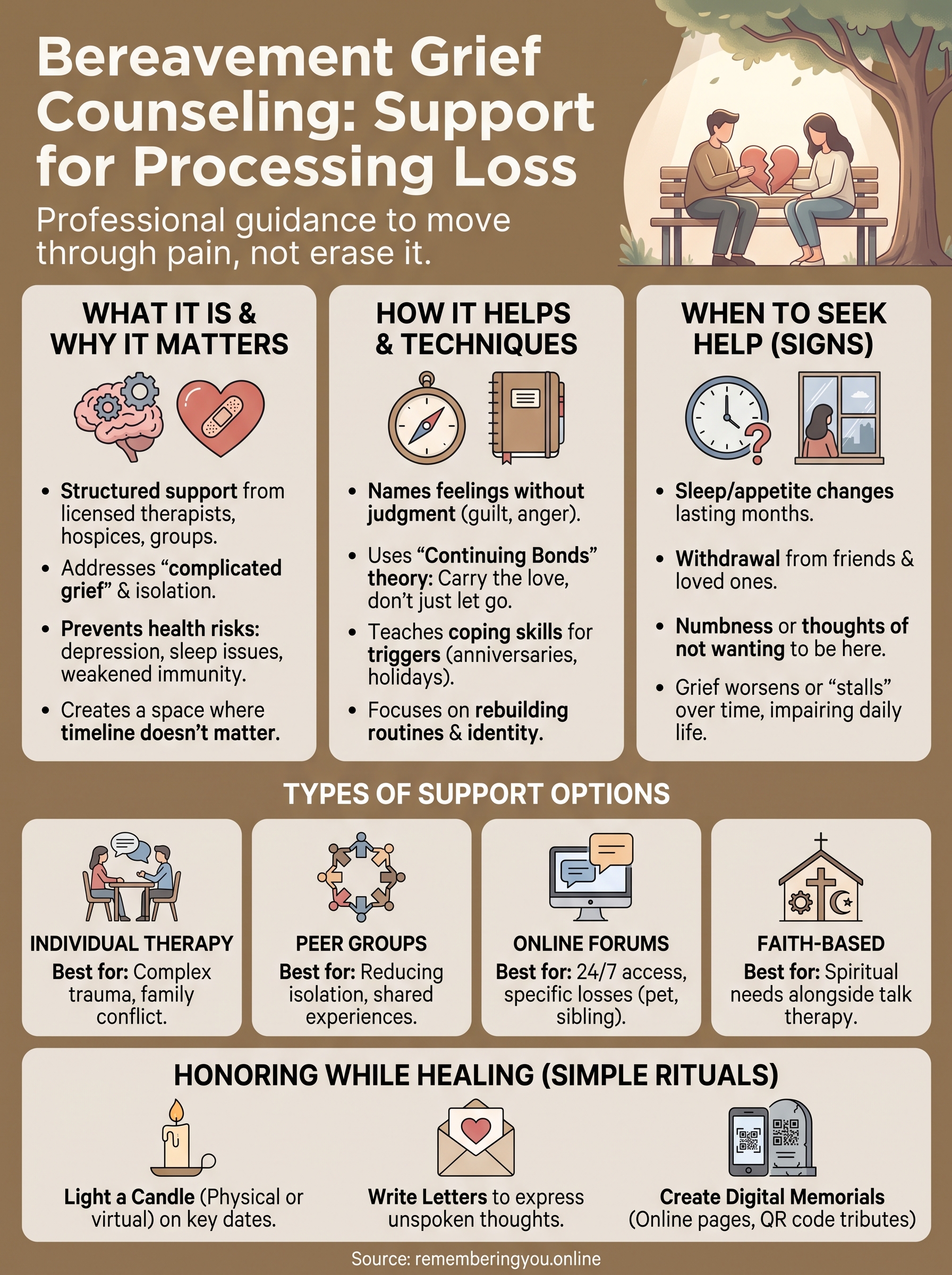
Bereavement grief counseling is professional support, from licensed therapists, grief-specific hotlines, support groups, or hospice aftercare programs, aimed at helping you process loss without judgment or a deadline. It's different from a casual chat with a friend because the person on the other end actually understands complicated grief, anticipatory loss, and the ways mourning shows up in your body, not just your mind.
This article breaks down what counseling actually involves, the different formats available (individual, group, online, faith-based), and where to find help, including free and low-cost options. We'll also touch on how creating a lasting tribute, something we build tools for at Remembering You, can work alongside counseling as part of the healing process.
Why bereavement grief counseling matters
Grief doesn't run on a schedule, no matter what your calendar says. Six weeks after a funeral, most people around you have moved on, gone back to work talk and weekend plans, while you're still waking up reaching for a phone that won't ring again. That gap between what the world expects and what your body actually feels is exactly why bereavement grief counseling exists. It gives you a place where the timeline doesn't matter and the questions you're afraid to say out loud, like whether you're relieved, or angry, or both, get room to breathe.
When grief becomes a health problem, not just an emotion
Unprocessed grief doesn't stay contained to your feelings. Studies published by the National Institutes of Health have linked prolonged, unsupported mourning to higher rates of depression, disrupted sleep, weakened immune function, and increased cardiovascular strain, particularly in surviving spouses within the first year of loss. Doctors sometimes call this complicated grief or prolonged grief disorder, a condition where mourning doesn't ease over time and instead calcifies into something closer to chronic distress. Left alone, it can bleed into your job performance, your other relationships, and your physical health in ways that sneak up on you months later.
Grief that isn't given a place to go doesn't disappear. It just finds a different way to show up.
The isolation trap after a loss
Friends and family mean well, but they often pull back exactly when you need them most, partly out of their own discomfort with death and partly because they don't know what actually helps someone who is grieving and assume you're managing fine if you're not saying otherwise. This creates a quiet isolation that compounds the original loss. You lose the person, and then you lose the easy support network you expected to lean on. Bereavement counselors and support groups fill that gap deliberately. They're not waiting for you to seem
How grief counseling helps you process loss
Grief counseling doesn't erase pain, and any therapist promising that isn't worth your time. What it does is give you a structured way to move through the pain instead of getting stuck circling it. A trained counselor helps you name what you're feeling, whether that's guilt over a last argument, relief that suffering ended, or anger at a diagnosis that came too late, the kind of emotions mapped out in the five stages of grief. Naming those feelings out loud, to someone who won't flinch or change the subject, is often the first real relief a grieving person gets.

Working through the specific stuck points
Most bereavement counselors use techniques drawn from cognitive behavioral therapy, narrative therapy, or grief-specific models like the Dual Process Model, which alternates between confronting the loss and taking breaks to rebuild daily life. Sessions might focus on:
- Untangling guilt from things you did or didn't say or do
- Processing anticipatory grief if the death followed a long illness
- Rebuilding routines that the loss disrupted, from meals to sleep to work
- Addressing intrusive thoughts about the death itself, especially after sudden or traumatic loss
- Reconnecting with identity when a role like spouse, caregiver, or parent has ended
A counselor tracks which of these areas is stalling your progress and adjusts the approach instead of applying a one-size-fits-all script.
Learning to carry grief instead of fighting it
A lot of grief work isn't about "getting over" someone. It's about learning to hold two things at once: continuing to love and remember the person while also continuing to live. Counselors call this continuing bonds theory, the idea that maintaining a relationship with the deceased, through memory, ritual, or ongoing conversation, is healthy rather than a sign you're stuck. This is part of why practices like visiting a grave, writing letters to the person you lost, or maintaining an online memorial page fit naturally alongside formal counseling instead of competing with it.
Healing from loss isn't about closing a chapter. It's about learning to carry someone with you without it breaking you.
Grief support also teaches concrete coping skills you can use outside the session, breathing techniques for panic that hits on the anniversary of a death, scripts for handling nosy questions at work, or ways to talk to kids about a grandparent who died. Those tools matter, and so does knowing how to help children understand death, because grief doesn't stay inside a fifty-minute appointment. It shows up in grocery stores, at holiday dinners, and on your first days back at your job after a death, and counseling gives you something to reach for when it does.
How to find bereavement grief counseling near you
Finding the right support shouldn't feel like another task on top of everything else you're carrying, but a little direction goes a long way. Start with people who already know your situation: your doctor, your loved one's hospice team, or the funeral home that handled arrangements. Hospices in particular are required to offer bereavement aftercare to surviving family members, often for a year or more, and it's frequently free even if your loved one wasn't a hospice patient themselves. Ask directly whether they have a grief counselor on staff or a referral list, because many families never realize this benefit exists until someone tells them.
Using national directories and hotlines
Beyond your immediate network, several established organizations maintain searchable directories of licensed grief counselors and support groups by zip code. The Substance Abuse and Mental Health Services Administration (SAMHSA) runs a free, confidential national helpline that connects callers to local mental health resources, including grief-specific ones, 24 hours a day. Other reliable starting points include:
- Psychology Today's therapist directory, filterable by "grief" as a specialty
- Local hospice organizations, many of which run open-enrollment grief groups regardless of prior hospice use
- Faith communities, since many churches and synagogues offer pastoral grief counseling at no cost
- Employee Assistance Programs (EAPs), which often include a set number of free counseling sessions through your job
The right counselor is usually closer than you think. It's asking the question out loud that's the hard part.
What to ask before you commit
Once you have a few names or organizations in hand, a short phone call before booking saves you from a bad first session. Questions worth asking include whether the counselor specializes in bereavement specifically versus general therapy, what their approach looks like (individual talk therapy, group format, or a mix), and whether they charge on a sliding scale if cost is a concern. Reputable grief counselors expect these questions and won't be put off by them.
While you're sorting through counseling options, it's worth setting up a space to hold the memories themselves. Many families find that building a free online memorial page gives them somewhere to return to between sessions, a place to add photos, write down stories, or simply sit with the person's timeline when a counselor's office feels far away.
Types of grief support worth exploring
No single format works for everyone, and that's actually good news. Bereavement grief counseling covers a wide range of settings, from one-on-one talk therapy to peer-led circles that meet in a church basement. Knowing the differences helps you pick something you'll actually stick with instead of quitting after one uncomfortable session.

One-on-one counseling versus group support
Individual sessions give you undivided attention from a licensed therapist, which matters if your grief is tangled up with trauma, a difficult family history, or a death by suicide or overdose. Group support, on the other hand, offers something a private session can't: the relief of hearing someone else say the exact thought you thought only you had. Many grieving people benefit from both, starting individually to stabilize, then moving into a group once they're ready to hear other stories alongside their own.
| Format | Best for | Typical cost |
|---|---|---|
| Individual therapy | Complicated grief, trauma, family conflict | $60 to $200/session, often less on sliding scale |
| Peer support groups | Feeling less alone, shared coping strategies | Free through hospices, faith groups, community centers |
| Online grief forums | Night owls, rural areas, mobility limits | Free to low-cost |
| Faith-based counseling | Families wanting prayer alongside talk therapy | Usually free through churches or synagogues |
Online and specialized options
Digital grief support has expanded fast, and it fills real gaps for people who can't find local openings or who grieve at 3 a.m. when nothing else is open. Platforms like GriefShare and the Dougy Center's online resources cater to specific losses, including pet loss support for anyone grieving a beloved dog, sibling loss, and grief after miscarriage or stillbirth. Options like these matter especially for people whose loss doesn't fit the
Signs it may be time to seek professional help
Grief doesn't come with a rulebook telling you when normal sadness has crossed into something that needs a professional's help. Most people muddle through without a clear signal, waiting for permission that never quite arrives. Recognizing the shift matters because prolonged grief disorder and untreated depression rarely resolve on their own, and knowing the difference between normal grief and complicated grief helps, since waiting months or years to reach out only makes the eventual work harder.
Watch for these physical and behavioral shifts
Some signs show up in your body and daily habits before you consciously register that something is wrong. Pay attention if you notice:
- Sleep that won't stabilize past the first few weeks, whether that's insomnia or sleeping far more than usual
- Appetite changes severe enough that you've lost or gained noticeable weight without trying
- Withdrawal from people you used to enjoy seeing, even the ones who aren't tied to memories of your loss
- Numbness that doesn't lift, where you feel disconnected from your own life months after the funeral
- Thoughts of not wanting to be here, even passing ones, which always warrant an immediate call to a professional or a crisis line
Any one of these on its own might just be a rough week. Several together, lasting more than a couple of months, are worth mentioning to a doctor or counselor.
When grief stalls instead of easing
Healthy grief tends to soften with time, even if it never fully disappears. Complicated grief does the opposite. It stays sharp, sometimes sharper, at six months or a year than it was at six weeks, and it starts interfering with work, parenting, or basic self-care in ways that don't improve. This is different from missing someone deeply for years, which is normal and even healthy under continuing bonds theory. The distinguishing feature is functional impairment, whether you can still get through a workday, maintain relationships, and take care of yourself.
If grief is getting worse instead of gently changing shape, that's the moment to bring in a professional, not a reason to wait longer.
Trust the moments that scare you
Sometimes the clearest sign is simply a private thought that scares you, a plan forming around ending your pain, or a level of anger and numbness that feels unfamiliar even to you. Those moments deserve action, not analysis. Reaching out to a bereavement grief counseling service, a hotline, or your own doctor that same day is never an overreaction.
Simple ways to honor a loved one while you heal
Grief counseling gives you a place to process pain, but healing also needs somewhere to put your love, not just your sorrow. Small rituals of remembrance work alongside bereavement grief counseling rather than replacing it, giving you tangible ways to keep a connection alive between sessions. Therapists who use continuing bonds theory actually encourage this. Remembering someone actively, instead of trying to move past them, is part of what makes grief bearable long term.
Rituals that fit into everyday life
Creating a routine around remembrance doesn't require anything elaborate. A few practices that grieving families return to again and again:
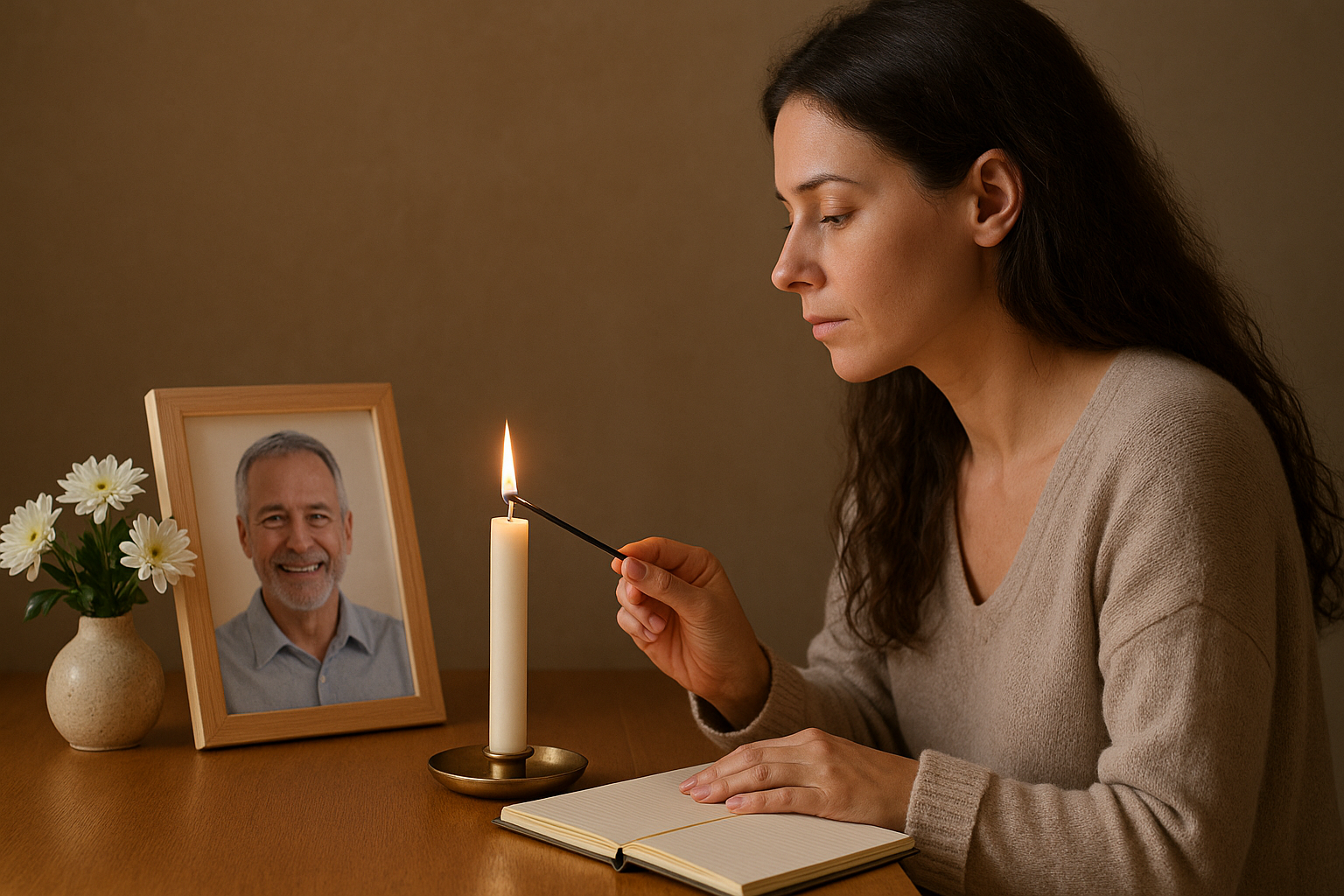
- Lighting a candle, in person or as a virtual candle online, on birthdays, anniversaries, or hard days that hit without warning
- Writing letters to the person you lost, saying what went unsaid
- Cooking their recipes and telling the story behind the dish to whoever's at the table
- Visiting a grave or scattering site on a schedule that feels right to you, not one someone else set
- Building a digital timeline of photos and milestones that family scattered across the country can visit anytime
Many families use a free memorial page for that last one, adding photos, a biography, and a place for friends and relatives to leave condolences and memories instead of letting stories live only in one person's head.
Remembrance isn't about staying stuck in the past. It's about giving love somewhere to go now that the person is gone.
Making remembrance physical, not just digital
Others find comfort in bridging the physical and digital sides of memory. A scannable QR code placed on a headstone, urn, or memorial card connects the grave itself to a digital tribute, letting anyone standing there pull up photos, a life story, or a video with their phone, which matters enormously for families who live states or continents apart and can't visit often. Pet owners use the same approach for a beloved animal's collar tag or a marker in the backyard, since that grief deserves real acknowledgment too, not dismissal.
Whatever form it takes, the goal is the same: a place to return to that isn't only inside your own head. Counseling helps you process the loss. A tribute page, a candle, a QR code on a stone, these give that processed grief somewhere permanent to live, which is often exactly what turns healing from a private struggle into something a whole family can share.
Taking the next step toward healing
Grief doesn't need you to have it figured out before you ask for help. Whether that means calling a hospice aftercare line, booking a first session with a counselor who specializes in loss, or simply showing up to a support group and saying nothing the first time, every one of those counts as real progress. Bereavement grief counseling works best when you stop waiting for the "right" moment to reach out and just make the call on a hard day instead of a calm one.
Alongside that professional support, give yourself somewhere to put the love you still carry. Setting up a free memorial page takes minutes, costs nothing to start, and gives your family a shared place to add photos, stories, and memories whenever they need it, and our guide to free grief support options after a loss shows you how the two fit together long after the funeral flowers are gone.