
Online Obituary Cost: What You’ll Pay and How to Save
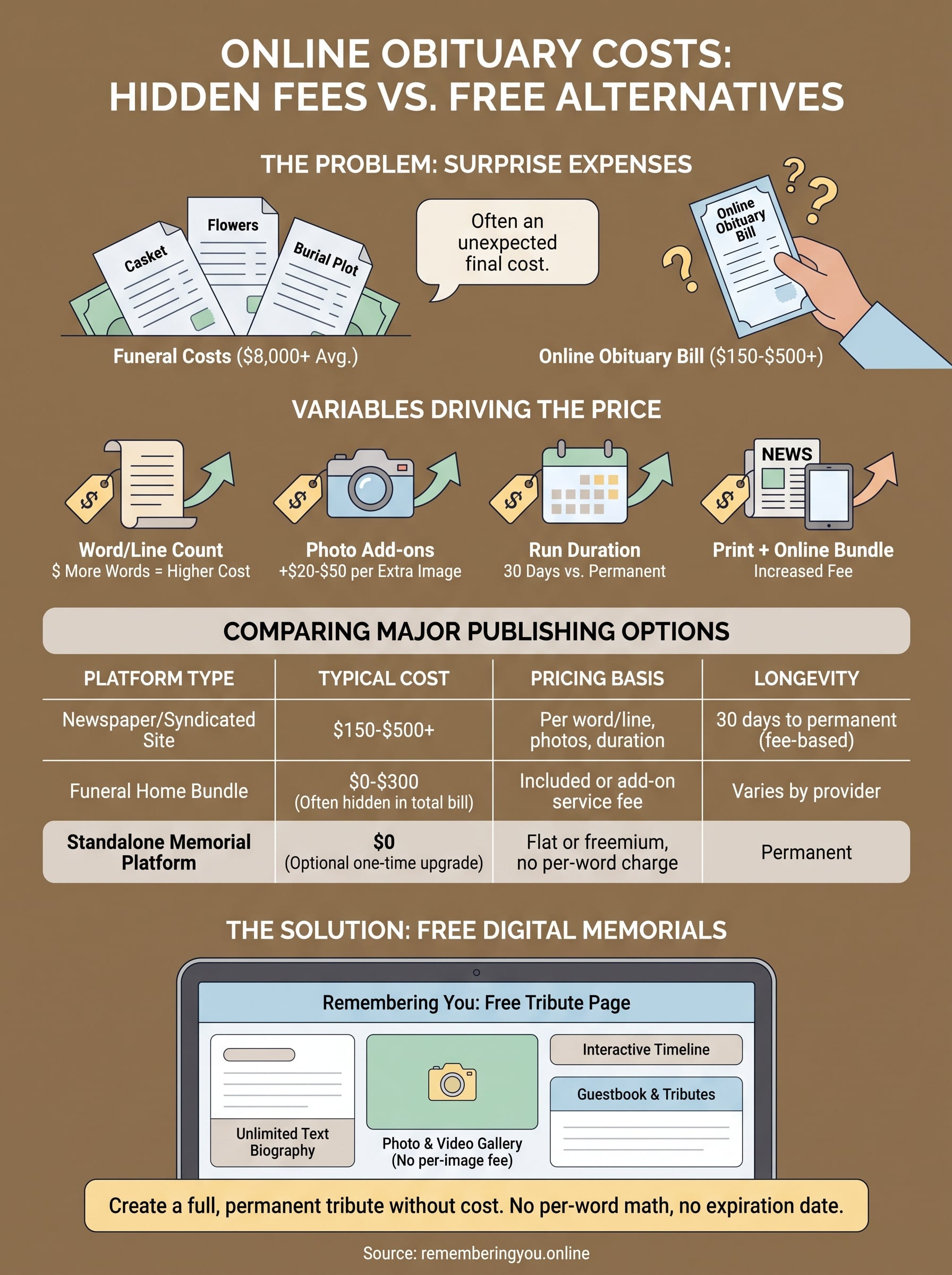
Funeral costs pile up fast, and then the newspaper or funeral home hands you a bill just to publish an obituary online. The online obituary cost catches a lot of families off guard because there's no standard price. You might pay $0, or you might pay $500 depending on where you publish and what you include.
Here's the short answer: newspaper sites like Legacy.com typically charge $150 to $400 for a basic online obituary, funeral home packages often bundle it in for free, and dedicated memorial page platforms can cost nothing at all. The price swings based on word count, photo add-ons, how long the listing stays live, and whether you're paying per publication or for a permanent page.
This article breaks down exactly what drives those prices, compares the major publishing options side by side, and shows you where the free alternatives actually hold up. If you're trying to honor someone without adding another expense to an already hard week, you'll see how a free digital memorial page can do more than a paid obituary ever could, and last far longer too.
Why online obituary costs matter when planning a tribute
Grief doesn't wait for your budget to catch up. Funeral costs already average over $8,000 according to the National Funeral Directors Association, and an obituary is often the last line item families think about, right after they've already spent on a casket, burial plot, and flowers. Adding a $300 newspaper obituary on top of that isn't a rounding error. It's real money that could go toward something else, like travel costs for family flying in from out of state.
The hidden expense in an already expensive week
Most people assume publishing an obituary is a flat fee, but pricing structures are rarely that simple. Newspapers and their online partners typically charge by the line or by the word, then tack on extra fees for a photo, a larger font for the headline, or extended run time. A short 200-word obituary with one photo can run $200, while a longer tribute with multiple photos in a major metro paper's online edition can hit $500 or more. Funeral homes sometimes fold this into their service package, but that
How to estimate what your online obituary will cost
Before you commit to any platform, walk through a few concrete questions. Word count, photo count, and how long you want the listing live all move the price up or down, sometimes by hundreds of dollars. Knowing these variables ahead of time keeps you from getting surprised by an upsell screen right when you're least prepared to negotiate.
The variables that actually drive the price
Every paid obituary service prices around a handful of factors, and once you see them listed out, the bill makes a lot more sense.
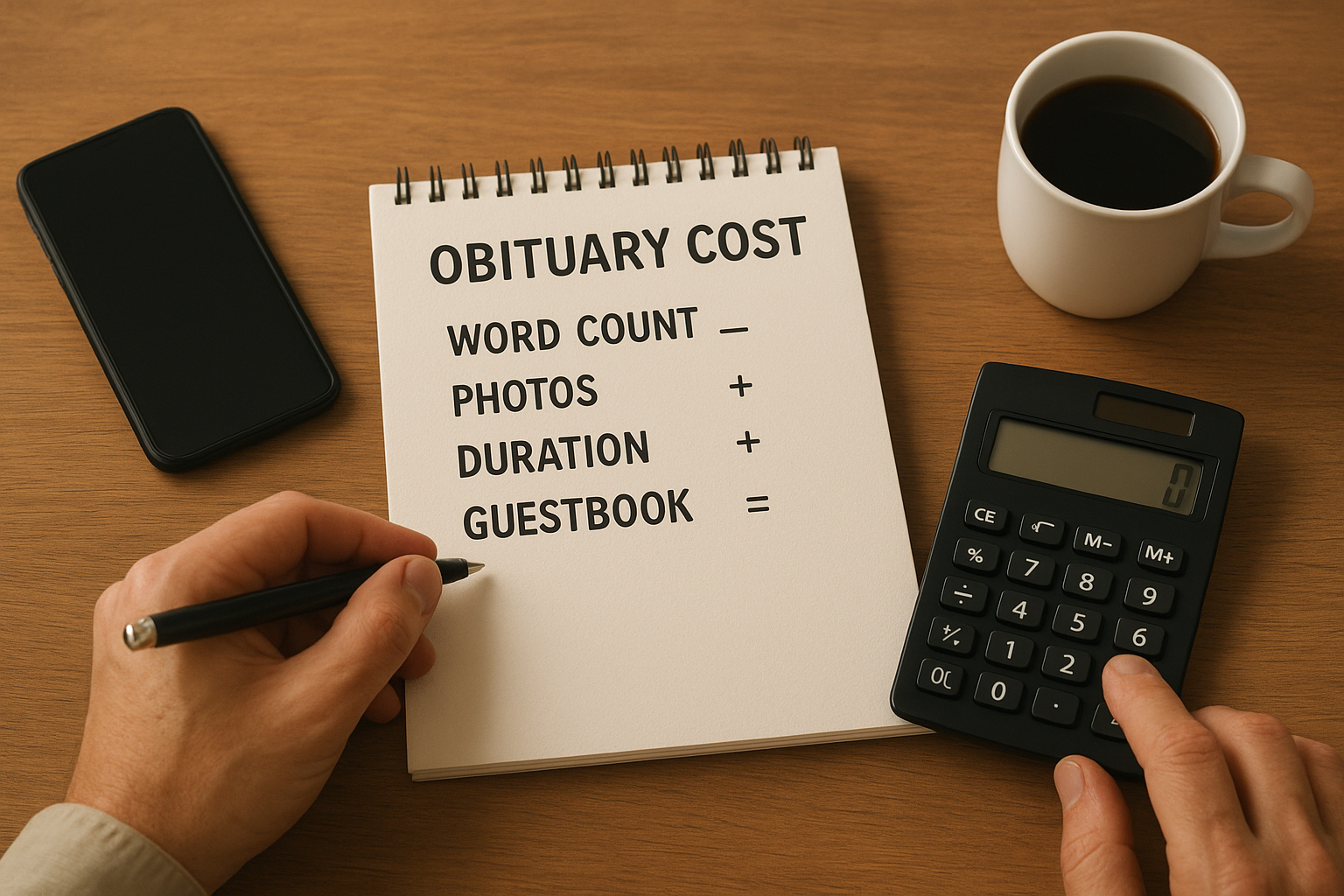
- Word or line count: most newspaper sites charge per line, so a 150-word obituary costs less than a 500-word life story
- Number of photos: one photo is often included, but each additional image can add $20 to $50
- Run duration: a single-day print-and-web listing costs less than a 30-day or permanent online placement
- Guestbook access: some sites charge extra to let visitors leave condolence messages
- Print plus online bundle: pairing a newspaper print ad with the digital version usually costs more than digital alone
The fewer words and photos you use, the lower the bill, but the less of the person's story actually survives online.
A simple way to price it out before you buy
Grab a rough draft of the obituary text first, then count the words. Most services price in blocks of 50 to 100 words, so trimming a paragraph before you submit can shave real money off the final total. Photos matter almost as much: decide upfront whether you want one image or a small gallery, because adding photos after publishing often costs more than including them at checkout.
Here's a quick way to sanity-check pricing before you commit:
Estimated cost = (base fee for first 50-100 words)
 + (per-word or per-line charge x extra words)
 + (photo add-on fee x number of photos beyond the first)
 + (run-time extension fee, if applicable)
Once you calculate this and see it push past $200 or $300, it's worth asking whether a paid newspaper listing is really the best use of that money, especially when a free digital memorial page can hold unlimited text, photos, and even video at no cost.
Ask the funeral home directly
Speaking with the funeral home before you assume anything is worth the five-minute phone call. Some funeral homes include one online obituary post as part of a standard service package, while others treat it as a separate line item you have to request and pay for separately. Getting a written breakdown of what's included, rather than guessing, prevents an awkward surprise on the final invoice.
Online obituary pricing by platform and package type
Every publishing option treats the online obituary cost differently, and the label on the package matters as much as the price tag. Newspaper sites bill by word count and add-ons, funeral home software bundles it into a service fee you may not even see itemized, and standalone memorial page platforms often skip the pricing model entirely. Knowing which category you're shopping in before you start comparing numbers saves you from comparing apples to oranges.
Newspaper and syndicated obituary sites
Sites like Legacy.com and regional newspaper partners dominate this category, and their pricing tends to follow a predictable structure: a base fee for the first block of words, then per-line charges after that, plus optional add-ons for photos and extended run time. Legacy fees vary by newspaper and region, so the same word count can cost more in a major metro paper than in a small-town publication. Most of these listings stay searchable for a set period, sometimes 30 days, sometimes indefinitely for an extra fee, so ask directly how long the page stays live before you pay.
Funeral home bundled packages
Funeral homes increasingly build an online obituary into their standard service package, which can feel like a free perk but usually isn't. The cost gets folded into the overall bill, so you're paying for it even if no separate line item shows up. Some homes use their own hosted obituary page, others push families toward a paid newspaper partner, and a few now recommend a free digital memorial as a supplement rather than a replacement.
Standalone memorial platforms
Dedicated memorial sites operate on a different model entirely. Instead of charging per word or per photo, they offer a free account with core features, then sometimes offer a one-time upgrade for extras like unlimited storage or advanced privacy controls. There's no recurring bill and no per-word math.
A newspaper obituary charges you for space; a memorial page platform gives you room to tell the whole story for free.
| Platform type | Typical cost | Pricing basis | Longevity |
|---|---|---|---|
| Newspaper/syndicated site | $150-$500+ | Per word or line, plus photo and duration add-ons | 30 days to permanent (fee-based) |
| Funeral home bundle | $0-$300 (often folded into total bill) | Included or add-on service fee | Varies by provider |
| Standalone memorial platform | $0, optional $24.99 one-time upgrade | Flat or freemium, no per-word charge | Permanent |
Line these three up side by side and the gap becomes obvious. A memorial platform costs nothing upfront, never charges by the word, and doesn't force you to trim a life story down to fit a billing tier.
How to publish a free online obituary
Free doesn't mean stripped-down anymore. Platforms built specifically for digital memorials, including Remembering You, let you build a full tribute page with photos, videos, and a written biography without ever entering a credit card number. You skip the per-word math entirely and publish the story exactly as long as it needs to be. This matters most when the person you're remembering lived a long, full life that a 200-word newspaper listing simply can't hold.
A free memorial page removes the word count entirely, so you stop editing a life story down to fit a price bracket.
Setting up your free memorial page
Getting a page live takes less time than most people expect, and none of the steps require payment information upfront. Here's the general path on most free memorial platforms:

- Create a free account using just an email address, no card required
- Add the basics: name, dates, photo, and a short biography
- Build a life timeline with milestones like birth, marriage, career highlights, and other key dates
- Upload photos and video without worrying about an add-on fee per image
- Set privacy, choosing between a public page or a password-protected one for family only
- Share the link by text, email, or social media, and generate a QR code if you want a physical link on a headstone or memorial card
Making the page complete without spending anything
Once the basic page is live, filling it out costs nothing extra, which is the biggest practical difference from a paid newspaper listing. Adding a second, third, or tenth photo doesn't trigger another charge the way it would on a per-photo pricing model. Video clips, voice recordings, and a guestbook where friends and family can leave condolence messages all sit inside the same free account, giving visitors more ways to remember the person than a static print obituary ever could.
Religious and cultural touches also come free on the right platform. A prayer intentions board, virtual candles, and flower tributes let Catholic and Christian families build the kind of communal remembrance space they'd otherwise pay a funeral home extra to include. None of that requires an upgrade, and the page stays live permanently instead of dropping offline after 30 days like many newspaper listings do. For families juggling other funeral costs, that permanence alone makes the free route worth serious consideration before paying for a word-limited alternative.
Smart ways to save on your online obituary
Saving money on an obituary announcement doesn't mean cutting corners on the tribute itself. Most of the savings come from knowing which fees are negotiable, which are padding, and which you can skip entirely by choosing a different platform. A few small decisions before you hit publish can cut a $300 bill down to $50, or to nothing at all.
Trim before you submit, not after
Writing a tight draft before you contact any paid service is the single biggest lever you control. Editing down to the essentials, then adding detail back only where it earns its place, keeps you from paying for filler words. Ask the newspaper or funeral home for their exact per-line or per-word breakpoints ahead of time, since many charge in blocks of 50 or 100 words rather than a smooth per-word rate, and landing just under a breakpoint can save a real chunk of the total.
Negotiate with the funeral home
Asking directly whether the obituary is truly included, or just bundled into a larger fee, often opens the door to a cheaper option. Some funeral homes will waive a print add-on if you only need the digital version, and others will let you supply your own photos to avoid a per-image charge. Requesting an itemized quote before signing anything gives you leverage to push back on charges that feel arbitrary.
Compare a few concrete money-saving moves
- Skip the print edition and publish digital-only when the newspaper offers both
- Ask about multi-day discounts instead of paying for repeated single-day runs
- Supply your own edited photo rather than paying the paper's photo-prep fee
- Request a shorter run if permanent placement isn't essential to your family
- Move the full story to a free memorial page and keep the paid notice short
Let a free platform absorb the real cost
Pairing a short, paid newspaper notice with a full free memorial page is where most families land once they compare the numbers. The paid listing announces the death and points people to more, while the free page holds the photos, timeline, and guestbook without a per-word or per-photo charge. This combination keeps the traditional notice families expect while moving the expensive parts, length and photo count, onto a platform that doesn't bill for either.
The cheapest online obituary is the one that stops charging you for every extra photo, word, or day it stays live.
Framing it this way changes the whole budgeting conversation. Instead of asking how to shrink a paid listing, ask whether you need one at all, or whether a permanent, free tribute page covers what the family actually wants people to see.
Finding the right fit for your tribute
The online obituary cost ultimately comes down to a choice: pay by the word for a listing that expires, or build something permanent for free. Newspaper sites still have their place for a short public announcement, but they were never designed to hold an entire life story. A free memorial page picks up where that short notice ends, with room for every photo, every milestone, and every message from people who loved that person.
Before you sign up for another paid add-on, ask what you're actually buying, extra days online, extra photos, or just peace of mind that the notice went out. Often the honest answer is that a free page does the job better and keeps doing it for years, not weeks.
If you want a tribute that never runs up a bill, create a free memorial page and give the story the space it deserves.