
Tombstones and Grave Markers: Types, Styles, and Costs
Choosing a headstone shouldn't feel like another exam you have to pass while you're still grieving, but that's exactly what happens when you walk into a monument shop with no idea what anything costs or means. Tombstones and grave markers come in more varieties than most people realize, from flat bronze plaques to upright granite monuments, and prices can swing from a few hundred dollars to well over five thousand depending on material, size, and engraving.
This guide breaks down the real differences between grave markers and headstones so you can walk into that decision with confidence instead of guesswork. You'll see how upright monuments compare to flat markers, which materials hold up best over decades outdoors, and what cemeteries typically allow before you fall in love with a design they'll reject.
We'll also cover realistic pricing ranges and the questions to ask any monument company before you sign a contract. And since a physical marker only tells part of a life's story, we'll show you how pairing it with a free digital memorial page, complete with a scannable QR code right on the stone, gives visiting family a way to read the fuller story anytime they stop by — here's what a QR code memorial is and how it works.
Why choosing the right memorial matters
A headstone isn't like a car or a couch you can trade in when you change your mind. It sits in the ground for generations, often outlasting everyone who chose it, so the pressure to get it right the first time is real. Get the material wrong, or pick a design the cemetery won't approve, and you're looking at a costly, emotionally draining do-over during a time when you have little energy left for either.
It's a decision you rarely get to redo
Granite and bronze monuments are built to survive fifty, seventy-five, even a hundred years outdoors, which means the choice you make this month becomes the family's answer for the rest of the century. Cemeteries also make changing an installed marker difficult and expensive, since it usually means paying for removal, storage, and reinstallation on top of the new stone itself. Families who rush the decision often regret the size, the wording, or the material years later, once weathering or fading reveals problems that weren't obvious in the showroom.
A headstone you choose in one afternoon of grief can outlast your grandchildren, so treat the decision with the weight it deserves.
Cemetery rules can limit your choices before you even start
Most cemeteries have written standards for grave markers and headstones, and they enforce them strictly. Before you fall for a design, confirm:
- Maximum height and width allowed for upright monuments
- Whether flat or flush markers are required in that section
- Approved materials, since some cemeteries ban certain stones or metals
- Foundation and base requirements, which affect total cost
- Rules on adding vases, photos, or QR code plaques
Calling the cemetery office before you meet with a monument company saves you from designing something that gets rejected at the approval stage.
The stone is only half the story
A granite marker can hold a name, two dates, and maybe a short line, but it can't hold every chapter of a life story, photos from every decade, or the voices of everyone who loved that person. That's where a digital memorial page fills the gap the stone physically can't, and it's worth seeing how an online memorial compares with a traditional headstone. Pairing a permanent monument with a free online memorial means visitors can scan a code right on the stone and read the fuller story, see photos, and even leave a message, long after the engraving stops.
How to choose a tombstone or grave marker
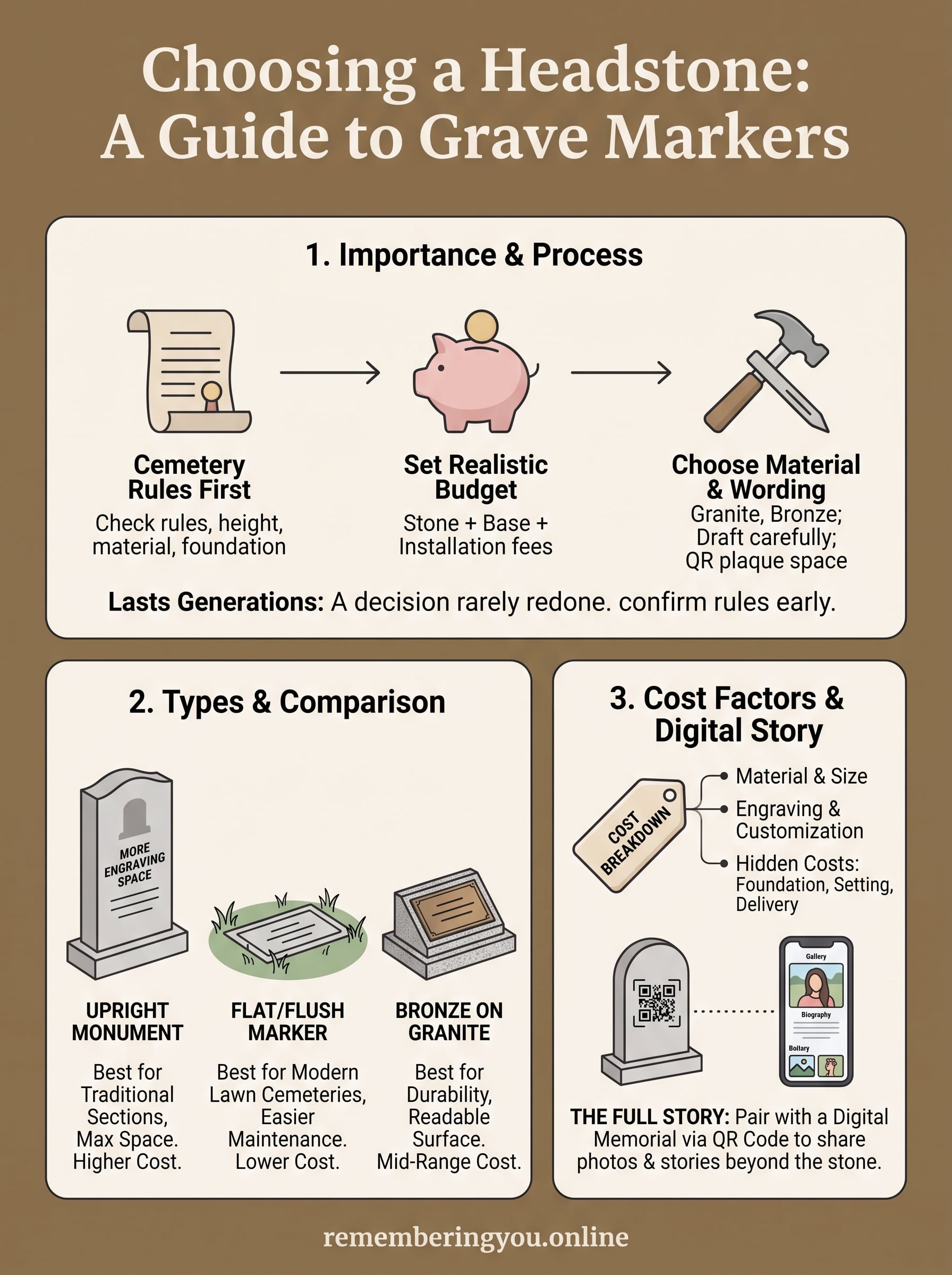
Picking the right monument grave marker starts long before you browse catalogs. Walk in with three answers ready: your budget ceiling, the cemetery's rules, and the words you want engraved. Skipping any of these steps means backtracking later, usually after you've already fallen for a design that won't work.
Start with cemetery approval and budget
Call the cemetery office first, not the monument dealer. Ask what they allow, then set a realistic budget that includes the base, engraving, and installation fees, not just the stone itself. Many families forget that a granite upright can need a foundation costing several hundred dollars on top of the marker price.
Decide what the cemetery permits and what you can afford before you fall in love with a design.
Match material to climate and maintenance
Granite resists weathering better than marble or limestone, especially in regions with freeze-thaw cycles or acid rain. Bronze plaques mounted on granite bases handle humidity well but need occasional cleaning to prevent tarnish. If you're choosing between headstones and grave markers for a coastal or northern climate, ask the dealer directly which materials they'd choose for their own family.
Decide on wording and symbols before ordering
Wording changes are expensive to fix once carved, so draft it carefully:
- Full name and any nickname that mattered
- Birth and death dates, formatted consistently
- A short epitaph or Bible verse, if desired
- Religious symbols, military emblems, or family crests
- Space reserved for a QR code plaque linking the grave to a digital tribute
Getting this list right the first time saves both money and heartache down the road.
Types of tombstones, grave markers, and monuments
Walking a cemetery shows you the full range of monuments and grave markers families choose, from towering obelisks to markers flush with the grass. Each style carries its own cost, upkeep, and cemetery restrictions, so it helps to see them side by side before you commit to one.
Upright monuments and flat markers compared
Upright headstones stand vertically and offer the most space for engraving, photos, and symbols, but many modern cemetery sections restrict them to keep mowing simple. Flat or flush grave markers monuments sit level with the ground and cost less to install, though they weather differently and can sink or get overgrown without regular care. Bronze plaques mounted on granite bases split the difference, giving you a raised, readable surface that still meets flush-marker rules in most sections.
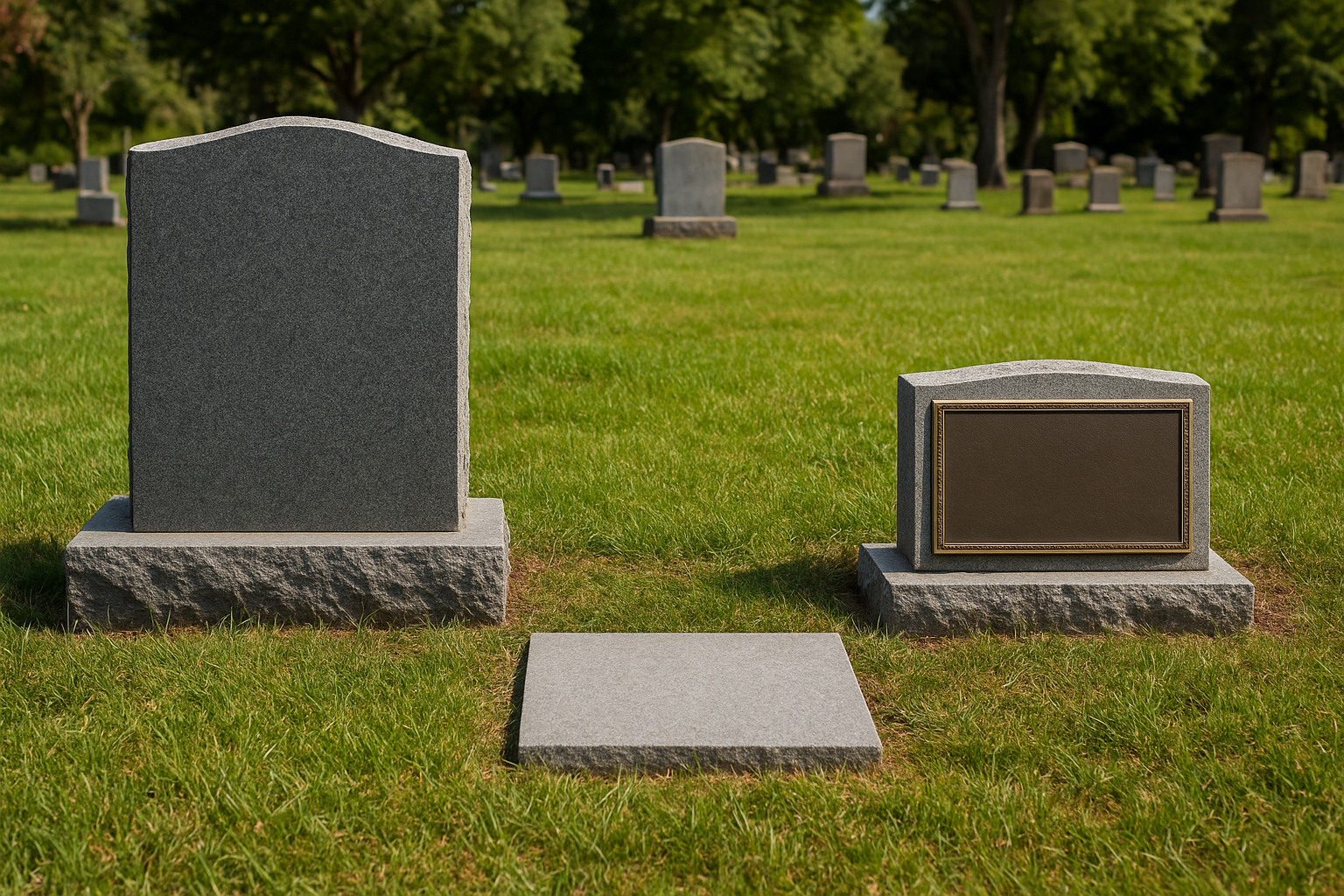
The style you're allowed to install often matters more than the style you love, so confirm cemetery rules before you fall for a design.
A quick comparison of common options
| Type | Typical Material | Best For |
|---|---|---|
| Upright monument | Granite | Traditional sections, maximum engraving space |
| Flat/flush marker | Granite or bronze | Modern lawn cemeteries, easier maintenance |
| Bronze plaque | Bronze on granite base | Durability with a raised, readable surface |
| Companion marker | Granite | Couples or family plots sharing one stone |
| Pet memorial stone | Granite or resin | Backyard or pet cemetery placement |
Comparing these options against your budget and cemetery rules narrows the field fast, before you ever set foot in a monument showroom.
What tombstones and grave markers typically cost
Pricing for tombstones and grave markers depends on material, size, and how much engraving you want, but most families land somewhere between $500 and $5,000 once installation is included. Simple flat markers in granite start the range low, while elaborate upright monuments with photos, statues, or custom shapes push it toward the top. Getting three quotes from local monument companies before you commit is the single best way to avoid overpaying for the same stone.
A realistic price breakdown
Budgeting gets easier once you see typical ranges laid out side by side.
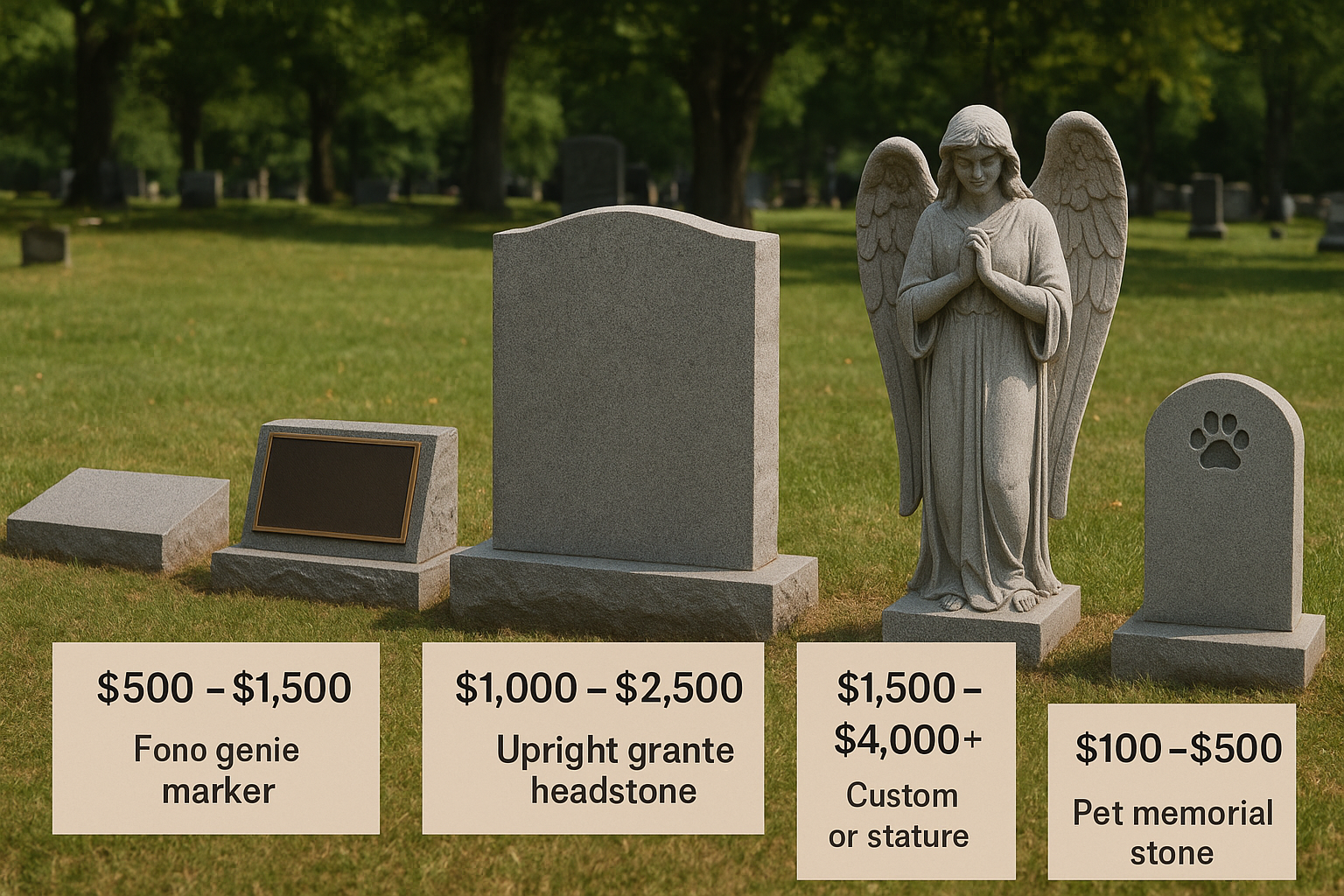
| Marker Type | Typical Cost Range | Notes |
|---|---|---|
| Flat granite marker | $500 - $1,500 | Includes basic engraving |
| Bronze plaque on granite | $1,000 - $2,500 | Base and installation extra |
| Upright granite headstone | $1,500 - $4,000 | Larger stones cost more |
| Custom or statue monument | $4,000 - $10,000+ | Depends on artistry and size |
| Pet memorial stone | $100 - $500 | Smaller size, simpler design |
The stone itself is rarely the whole bill, so ask for a total that includes the base, delivery, and setting fees.
Hidden costs catch families off guard more often than the marker price does. Foundation work, delivery fees, and cemetery setting charges can add several hundred dollars beyond the quoted stone price, so ask every dealer for an all-in total before signing anything.
Installation timelines matter too, since most cemeteries require the ground to settle for six to twelve months after burial before an upright monument goes in. Waiting that long feels frustrating, but rushing installation risks the marker sinking or shifting once the soil settles fully.
Honoring a life that lasts
Granite and bronze grave markers will always carry weight that pixels can't replicate. You can run your hand across carved letters, kneel at a headstone, and feel a permanence that matters to grieving families. Nothing in this guide argues against that.
But stone alone was never meant to hold an entire life. Tombstones and grave markers give visitors a name and two dates; they can't hold the sound of someone's laugh, the story behind their nickname, or the hundred photos that never made it into a frame. That's the gap a digital memorial closes, standing beside the physical marker rather than replacing it.
Before you finalize any order with a monument company, take fifteen minutes to build the fuller story that belongs alongside it. Create a free digital memorial tribute page, add the photos and details that matter, and order a QR plaque for the stone so anyone standing at that grave can read the whole life, not just the dates.