
9 Meaningful Tribute Ideas to Honor a Loved One
You want to do right by someone who mattered, and a generic bouquet or a form-letter obituary feels wrong. Whether you're planning a funeral, a celebration of life, or looking for living tribute ideas to honor someone while they're still here to see it, the pressure to get it right is real. Most lists of tribute ideas for funerals repeat the same three suggestions: plant a tree, light a candle, donate to charity. Helpful, but thin.
This article gives you nine tributes that actually feel personal, drawn from what grieving families and funeral professionals say works. You'll find tribute ideas for death anniversaries and services, plus options for honoring someone before they pass, so the gesture means something to the people who knew them best.
We'll also show you how a digital memorial page fits into several of these ideas, letting scattered family and friends contribute photos, memories, and messages long after the service ends. No printing, no mailing, just one shared space that keeps growing.
1. Create a free digital memorial page
A digital memorial page gives you a single online home for someone's life story, and it's the most flexible of all the tribute ideas on this list because it can hold everything else. You add photos, upload videos, write a biography, and build a timeline of milestones instead of squeezing a whole life into a two-minute eulogy. Family scattered across three time zones can visit the same page, at the same link, whenever they need to feel close to that person again.
How it works
Sites like Remembering You walk you through the steps to build a memorial page in minutes, no credit card required. You pick a privacy setting, public or password-protected, fill in a life story, and start uploading media. A unique QR code for a memorial gets generated, so you can print it on a funeral card, engrave it near a headstone, or tuck it into a photo frame, and anyone who scans it lands straight on the tribute.
A digital memorial page turns a single service into a living tribute that keeps collecting memories for years.
Who it's best for
Geographically spread-out families are the clearest fit here, since not everyone can fly in for a service but everyone can click a link. It also suits Catholic and Christian families who want a shared guestbook, candle-lighting, and prayer intentions built into the page itself. Funeral homes and celebrants recommending aftercare tools, plus pet owners who want a lasting record for an animal companion, both find real use in this format too.
Tips to make it meaningful
Invite contributors early, since a memorial fills out fastest when several people are adding photos and stories at once. Consider these small touches:
- Add a short timeline of milestones with five or six entries, not just birth and death dates
- Turn on the guestbook so distant friends can leave a memory in their own words
- Order a printed QR code card for the service so guests can revisit the page later
- Upgrade once, for a one-time $24.99 fee, if you want every feature unlocked with no recurring cost
Once the page exists, it becomes the anchor for several other tributes on this list, from photo displays to shared memory books.
2. Photo and video tribute displays
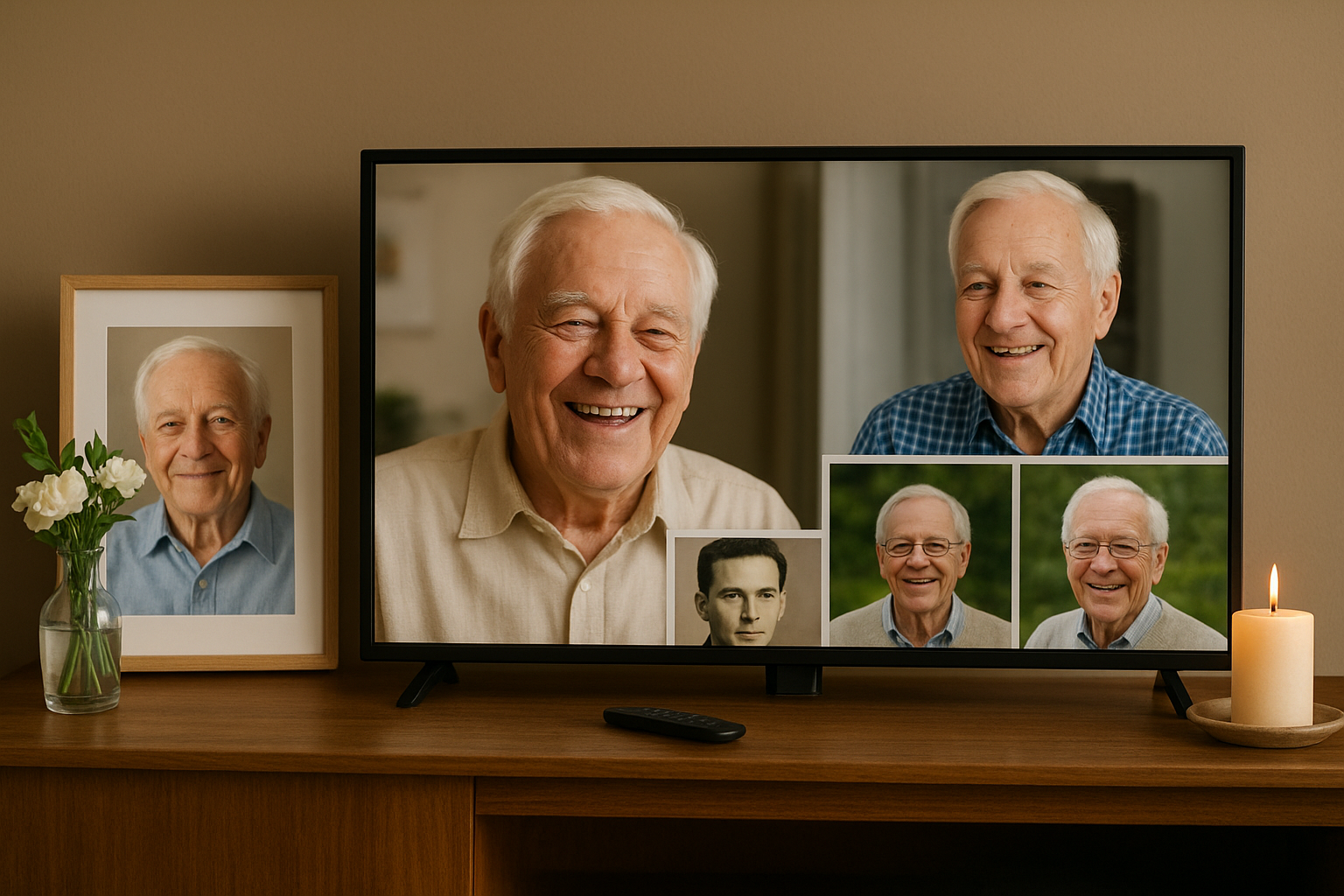
A slideshow of photos and short video clips brings a person's face, voice, and mannerisms back into the room in a way words alone can't. This is one of the simplest tribute ideas for funerals, and it works whether you're setting up a screen at the wake or building a digital version that guests can watch from home.
How it works
Gather images from different decades, not just the last few years, and pair them with a few clips of the person talking, laughing, or doing something they loved, which is how you build a tribute video worth watching. Run the slideshow on a loop during the visitation, or upload the same files to a digital memorial page so relatives who missed the service can still watch it whenever they want.
A well-built photo and video tribute lets people hear a laugh or a voice again, which a printed program never can.
Who it's best for
This suits families with a large photo archive already sitting in phones, cloud albums, or old shoeboxes, and there are plenty of ways to display a photo tribute once you've gathered it. It also works well for pet memorials, where a short video of playful moments often means more than any written biography.
Tips to make it meaningful
- Ask relatives to submit their own photos so the display isn't limited to one person's collection
- Keep clips short, under 30 seconds each, so the slideshow doesn't drag
- Add captions with dates and names for younger relatives who never met the person
- Store the final file on the memorial page so it never gets lost on an old phone
3. Memory jars and shared memory books
Some of the best tribute ideas don't need a screen at all. A memory jar or a shared memory book gives guests something tactile to hold at a wake or celebration of life, and it captures the small, specific stories that never make it into a formal eulogy. Anyone who's watched a room full of relatives pass a notebook around knows how fast the pages fill up.
How it works
Set out a jar with blank slips of paper and a pen, and ask each guest to write down one memory, one word that describes the person, or a message to the family before dropping it in. A memory book works the same way but stays bound together, often placed beside a book of condolences and shared memories so it doubles as a keepsake the family reads later, long after the flowers have wilted.
A memory jar turns dozens of quiet, private thoughts into one shared collection the family can revisit for years.
Who it's best for
Large extended families with guests who might feel awkward speaking at a microphone tend to prefer this format, since writing feels less exposed than talking. It also suits pet memorials, where kids and grandkids can each add a favorite memory of the animal.
Tips to make it meaningful
- Leave a prompt card nearby, like "share a memory" or "describe them in three words"
- Photograph the filled slips before storing them, in case the paper fades
- Transcribe favorite entries into the person's digital memorial page so they're never lost
4. Heartfelt words: eulogies, letters, and quotes
Words carry weight that objects can't match, and a well-written eulogy or letter often becomes the piece of a service people remember years later. This is one of the oldest tribute ideas in the book, but it still works because it forces you to be specific about who someone actually was, not just how they died.
How it works
Writing a eulogy: tips, structure, and examples all point the same way, toward two or three stories that show character rather than a chronological résumé of dates and jobs. A letter addressed directly to the person, read aloud or kept private, does something similar but feels more intimate. Some families skip the speech entirely and instead choose a favorite quote or verse the person lived by, printing it on the funeral program or engraving it into a keepsake.
A single specific story about someone says more than a list of their accomplishments ever will.
Who it's best for
Anyone comfortable with public speaking, or willing to hand the eulogy to someone who is, benefits most here. Quieter families who'd rather not speak at a service can still lean on a written letter or a printed quote instead.
Tips to make it meaningful
- Ask three or four relatives for one story each, then weave the best lines together
- Read the eulogy aloud once before the service to check timing and tone
- Post the full text, along with any letters, on the person's digital memorial page so latecomers and out-of-town family can read it whenever they need to
5. Symbolic keepsakes and memorial jewelry
Holding something physical that once belonged to a loved one, or was made to honor them, gives grief a place to land when words feel inadequate. This is one of the more personal tribute ideas on this list, since a keepsake stays with one person, in a pocket or on a wrist, long after the flowers and cards are gone.
How it works
Companies now turn a small amount of cremation ash, a fingerprint, or even a lock of hair into keepsake jewelry and other in loving memory tributes like pendants, rings, or bracelets. Other families choose simpler symbolic pieces, a watch, a scarf, a tool from the garage, and pass them down as keepsakes with a story attached. Some engrave a birthstone or a short phrase directly into the piece so the meaning is obvious to anyone who asks about it later.
A keepsake works because grief needs something to hold, not just something to remember.
Who it's best for
Spouses, children, and close siblings tend to value keepsakes most, since the item becomes a daily, private point of connection rather than something reserved for anniversaries. It also suits families splitting up an estate who want each person to leave with something meaningful, not just money.
Tips to make it meaningful
- Choose an item tied to a specific memory, not just something valuable
- Order matching pieces for siblings so each person carries the same connection
- Photograph the keepsake and add the story behind it to the memorial page
6. Music-based tributes
Music reaches people in ways that speeches and photos sometimes can't, which is why so many families build a tribute around a single song or a full playlist. This idea works for funerals, celebrations of life, and even living tributes where you play someone their favorite album while they're still around to hear it.
How it works
Pick a signature song the person loved, danced to at their wedding, or hummed while cooking, and play it during the service or at the reception afterward. Some families go further and build a full memorial playlist covering different decades of the person's life, then share the link so guests can keep listening at home. A live musician, even a single guitarist playing one requested song, often lands harder than a recorded track.
One familiar song can bring a room to tears faster than any speech.
Who it's best for
Musically inclined families, or anyone who remembers a loved one constantly singing along to the radio, tend to gravitate toward this tribute. It also suits younger mourners who connect more easily with a shared playlist than a formal program.
Tips to make it meaningful
- Ask relatives to each suggest one song and explain why, then compile the list together
- Note the story behind each track so the meaning isn't lost on younger listeners
- Embed the playlist link on the person's digital memorial page so it stays accessible for anniversaries and future visits
7. Charitable acts and living memorials
Giving in someone's name turns grief into action, and it's one of the meaningful ways to honor them on the anniversary that keeps producing good long after the funeral flowers are gone. A donation, a scholarship, or a planted tree becomes a living memorial, something that grows or helps people year after year instead of sitting in a closet.
How it works
Choose a cause tied to how the person lived or died, a cancer charity if that's what took them, a literacy program if they loved reading, an animal shelter if they always had a rescue dog underfoot. Some families set up a fund to collect donations in their memory at a local school, while others organize an annual blood drive or a park cleanup on the anniversary of the death.
A charitable tribute keeps working for other people long after the service ends.
Who it's best for
Families who'd rather see money go toward a cause than toward flowers often prefer this route, and it suits public figures, teachers, and community members whose loss touched more than just close relatives. It also works well when siblings disagree on how to spend estate funds but agree on honoring a shared value.
Tips to make it meaningful
- Pick one cause and stick with it, rather than scattering donations across several charities
- Set a recurring date, like the birthday or anniversary, to repeat the act each year
- List the cause and a giving link on the digital memorial page so guests know exactly where to send flowers-in-lieu donations
8. Living tributes for someone still with you
Not every tribute has to wait for a funeral. Living tribute ideas let you honor someone while they can still see the appreciation, hear the stories, and feel the weight of what they mean to people. A terminal diagnosis, a milestone birthday, or simply the realization that time is short often pushes families toward this option, and it tends to leave fewer regrets than waiting.
How it works
Gather the same stories, photos, and letters you'd normally save for a eulogy, then deliver them while the person is present. A living funeral brings friends and family together for speeches, a shared meal, and open conversation, almost like a celebration of life held early. Smaller versions work too: a video montage of well-wishes, a memory book passed around at a birthday dinner, or a private digital memorial page the family builds together and shares with the guest of honor.
Telling someone what they meant to you while they're still here beats saying it for the first time at their funeral.
Who it's best for
Families facing a terminal illness, aging parents, or anyone marking a major milestone birthday get the most out of this tribute, since it turns anticipated grief into a moment of connection instead.
Tips to make it meaningful
- Ask guests to speak directly to the person, not about them in third person
- Record the event so it can be revisited later, and keep the stories safe for future generations
- Build a shared memorial page in advance and let the honoree add their own memories to it
9. Public memorials like plaques and benches
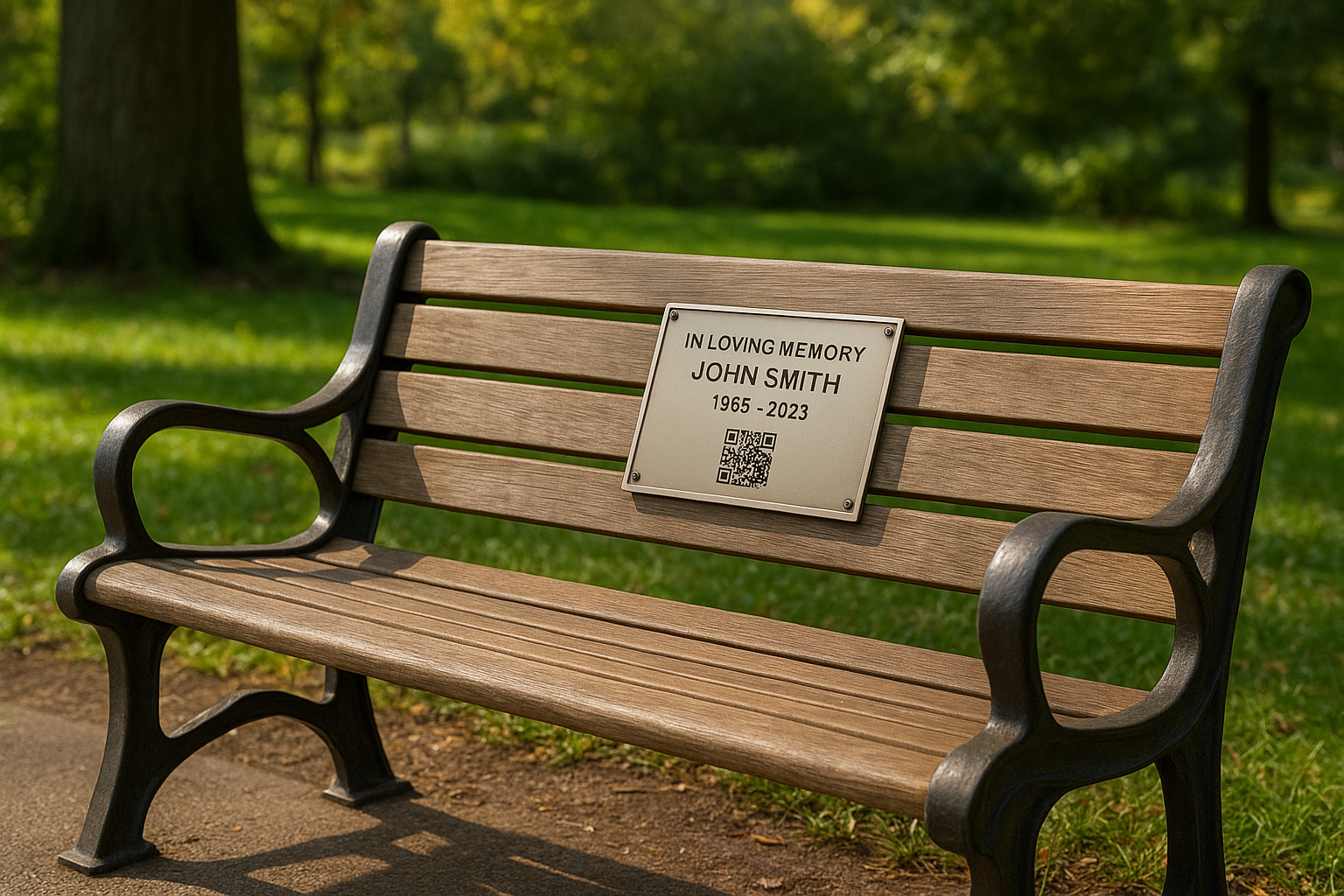
Some tributes belong outside, in a place the person actually loved, rather than in a photo album. A memorial bench or engraved plaque in a park, garden, or along a favorite trail gives strangers and family alike a quiet spot to sit and remember, and it turns an ordinary walk into a small act of remembrance for anyone who reads the inscription.
How it works
Most cities, parks departments, and botanical gardens run a dedication program where you pay a fee to install a bench or plaque with a short engraved message. Costs vary widely, so check with the specific park or municipality before committing to a design. Many families pair the plaque with a QR code sticker that links directly to the person's digital memorial page, so a passerby who stops to read the inscription can also see photos and hear the fuller story.
A bench in the right spot keeps someone's memory in a place they actually loved, not just in a cemetery.
Who it's best for
This suits people who spent real time outdoors, hikers, gardeners, dog walkers, or anyone with a favorite park bench they visited weekly. It also works for community figures whose loss affected neighbors beyond immediate family.
Tips to make it meaningful
- Choose a spot tied to a specific memory, not just any available bench
- Keep the engraving short, a name, dates, and one line they'd have liked
- Add a small, weatherproof QR code linking to the full memorial page
Finding the tribute that feels right
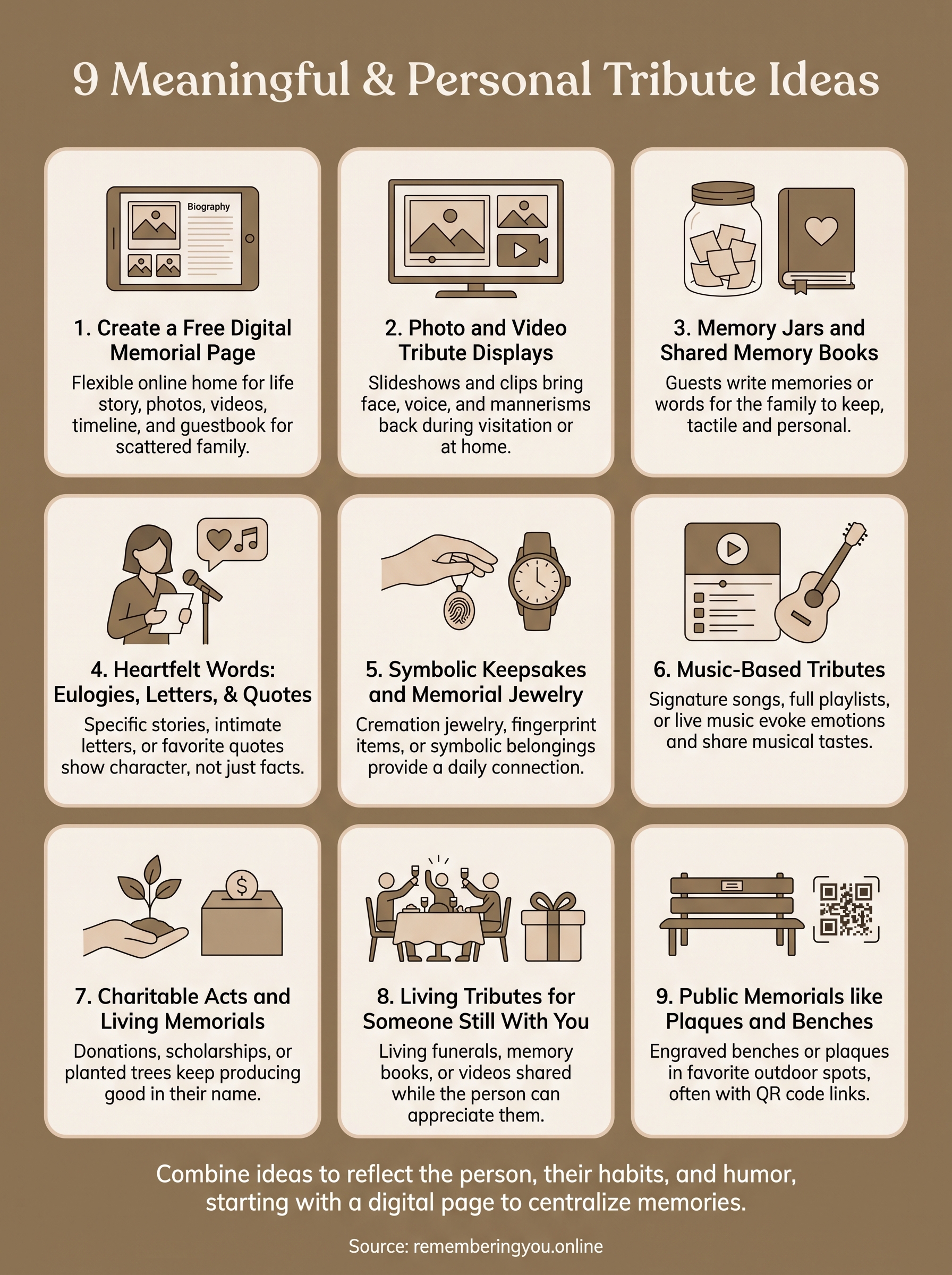
None of these nine ideas work in isolation, and the families who feel most at peace usually combine a few: a eulogy read aloud, a memory jar passed around, a photo slideshow looping in the background. Tribute ideas don't need to be expensive or elaborate to matter. They need to reflect the actual person, their habits, their humor, the songs they hummed while cooking dinner.
If you're not sure where to start, build the digital memorial page first. It costs nothing, takes minutes to set up, and gives every other tribute on this list a home, from the photo slideshow to the charity link to the QR code on a bench. Stories and photos scattered across group texts and old phones get lost. A shared page doesn't.
Start a memorial tribute page for free today and give the people who loved them one lasting place to remember.