
60 Sympathy Messages Cards for Every Kind of Loss
You're staring at a blank card, pen in hand, and nothing sounds right. Every phrase feels either too formal or too casual for the person you're trying to comfort. That blank space feels heavier when the loss is complicated: a coworker's parent, a friend's pet, a child, a spouse of fifty years. Finding the right sympathy messages cards for that exact relationship is harder than it should be.
This list gives you real wording you can use today, organized by who you're writing to and what kind of loss they're facing, and if you need even more options there are 75 sympathy messages for cards to browse as well. You'll find short condolence lines for coworkers and acquaintances, longer messages for close family, and specific wording for the loss of a child, a spouse, a parent, or a beloved pet. Each one is ready to copy into a card or adapt in your own words.
Beyond the card itself, we'll also point you toward something that lasts longer than a sympathy note sitting in a drawer. A digital memorial page gives family and friends scattered across the country a shared place to add their own memories, photos, and messages, long after the funeral flowers have faded, and if you are sending blooms too, there are heartfelt messages for sympathy flowers worth reading first. If you're sending a card, setting up a shared online memorial page for a loved one is a natural next step worth knowing about.
1. Sympathy messages for the loss of a parent
Losing a parent reshapes your sense of home, no matter your age when it happens. Whether you're comforting a coworker, a close friend, or a sibling, the right sympathy card wording for a parent's death should name that specific relationship instead of leaning on generic phrases about loss in general. This section gives you options for different levels of closeness, from a formal note to a deeply personal message, and there are sympathy card messages for the loss of a father if that is the parent you're writing about.
Example sympathy messages
Below are messages you can copy as written or adjust to match your own voice and your relationship with the grieving person:
- "Your mother gave so much love to everyone around her. I'm holding you close during this time."
- "Losing a parent leaves a space nothing else can fill. I'm here for you, whenever you need to talk or just sit quietly."
- "Your father's kindness touched so many lives, including mine. My deepest condolences to you and your family."
- "There are no words that make this easier, but please know I'm thinking of you and your family every day."
- "I'll always remember the way your mom laughed. Her spirit will stay with everyone who knew her."
- "Sending you strength and comfort as you navigate the days ahead without your dad by your side."
The right words for losing a parent name the person, not just the loss.
Who these messages are for
These messages suit anyone comforting a person who has lost a mother, father, or both parents, whether the relationship was close and daily or complicated and distant. Grown children grieving after a long illness, teenagers losing a parent unexpectedly, and even friends writing condolences on behalf of a family member can all use this wording as a starting point.
- Adult children mourning a parent after months of caregiving
- A coworker or manager comforting an employee whose parent passed suddenly
- Friends or neighbors writing on behalf of a family they know less personally
Tips for personalizing your card
Personalizing a card takes less effort than you'd think, and it's what turns a generic line into something the family keeps. Mention a specific memory, a habit, or a phrase the parent was known for, since this shows you're speaking about that person and not writing a form letter. Keep the tone matched to how well you knew them: a close friend can write two or three sentences, while a distant acquaintance can stick to one warm line plus a shared memory if there is one.
- Name the parent directly ("your mother," "your dad Frank") instead of saying "your loved one"
- Reference one specific quality or memory, even a small one
- Offer a concrete next step, like "call me anytime" instead of a vague "let me know if you need anything"
- If you're mailing the card, consider including a note about a digital memorial page where family can add their own stories later
2. Sympathy messages for the loss of a spouse
Grief after losing a spouse looks different depending on whether the marriage lasted five years or fifty. A message for a widow or widower needs to acknowledge the partnership itself, the daily life that's now missing a person, not just a vague nod to "loss." Good spouse sympathy wording speaks to the shared history without pretending to understand its full weight.
Example sympathy messages
Use these as written, or soften and lengthen them to match your closeness with the widow or widower:
- "There are no words for losing your partner in life. I'm here for whatever you need, today and in the months ahead."
- "Your marriage was a beautiful thing to witness. Holding you in my heart during this impossible time."
- "He was your rock and your best friend. I hope you feel surrounded by love as you grieve him."
- "Losing a spouse changes everything about daily life. Please lean on me for the small things, not just the big ones."
- "Your love for each other was obvious to everyone who knew you. I'm so sorry for this loss."
A spouse's death changes daily life, so offer help with daily things.
Who these messages are for
These lines work for anyone comforting a widow or widower, whether the marriage spanned decades or was cut short after just a few years together. They also suit adult children writing on behalf of a grieving parent who lost their partner.
Tips for personalizing your card
Include a memory of the couple together if you have one, since it shows the marriage mattered to you too. Offer specific help, like meals or errands, rather than open-ended offers. Point toward a lasting option too: an online memorial guestbook for a spouse lets family add photos and stories over time.
3. Sympathy messages for the loss of a child
No loss cuts deeper than a parent burying their own child, and no card can fix that. The words you choose in sympathy messages cards for this kind of grief should avoid clichés about "a better place" or "everything happens for a reason," since those phrases often land as dismissive rather than comforting. What helps most is simple presence on the page: an acknowledgment that this pain is real and that you're not going anywhere.
Example sympathy messages
These lines lean toward gentle and direct, since child loss rarely needs elaborate wording:
- "There are no words for losing a child. I'm holding you and your family close."
- "Your baby was loved by so many, even in such a short time. I'm so deeply sorry."
- "I can't imagine this pain, but I'm here for you, today and every day after."
- "Your child's light touched everyone who knew them. That won't be forgotten."
- "Sending you love and quiet strength as you carry this unimaginable loss."
With child loss, presence matters more than any perfect phrase.
Who these messages are for
These messages fit parents grieving a child of any age, from infant loss to the death of a grown son or daughter, and they work whether you're a close relative or a distant acquaintance offering condolences.
Tips for personalizing your card
Avoid explaining the loss or offering reasons for it. Instead, name the child if you knew them, and mention something specific you remember. Follow up in person weeks later, since grieving parents often say support fades just when they need it most, and gently mention bereavement counseling for parents if the family seems open to it.
4. Sympathy messages for the loss of a sibling
Sibling grief often gets overlooked because attention naturally goes to parents or a surviving spouse, yet losing a brother or sister means losing someone who shared your entire childhood. Good sympathy messages cards for a sibling's death should acknowledge that shared history, the inside jokes and family memories that only that person understood. This kind of loss deserves its own wording, not a borrowed line meant for a parent or friend.
Example sympathy messages
These lines speak to the unique bond between siblings, whether close in age or not:
- "Your brother was such a huge part of your life story. I'm so sorry for this loss."
- "Losing a sibling means losing a piece of your own history. I'm here for you."
- "Your sister's laugh filled every room. I'll miss her too, and I'm thinking of you."
- "No one shares your childhood memories like a sibling did. Holding you close right now."
- "I know how much you two meant to each other. Sending you comfort and strength."
A sibling shares your history, so honor that shared past in your words.
Who these messages are for
These messages suit anyone grieving a brother or sister, whether they lived down the street or across the country, and whether the relationship was close or complicated toward the end.
Tips for personalizing your card
Mention a shared childhood memory if you know one, since it validates a bond that outsiders often underestimate. Suggest creating a family memorial page together as siblings sometimes do to preserve old photos, or share a few ways to turn old family photos into a tribute.
5. Sympathy messages for the loss of a grandparent
Grandparents often carry family history that nobody else can replace, so their death can hit harder than people expect from the outside. Writing sympathy messages cards for a grandparent's passing means honoring both the personal loss and the family stories that person held together. Whether the grandchild was young or grown, the right words should treat this grief as real, not lesser than losing a parent.
Example sympathy messages
Here are lines you can use directly or adapt to fit the family:
- "Your grandmother held so much family history and love. I'm so sorry for this loss."
- "Grandparents leave such a mark on our lives. Thinking of you and your whole family."
- "Your grandpa's stories will live on through everyone who knew him. Sending comfort your way."
- "Losing a grandparent means losing a link to your family's past. I'm here for you."
- "She was such a steady presence in your life. I hope you find peace in all those memories."
Grandparents hold family history, so grief for them deserves full weight, not a smaller card.
Who these messages are for
These messages work for grandchildren of any age, from young kids losing a grandparent for the first time to adults who leaned on that grandparent as a second parent.
Tips for personalizing your card
Name the grandparent's role in the family, like "the one who kept everyone together at holidays," instead of a generic label. Suggest starting a grandparent memorial page where cousins scattered across states can add old photos together, or a yearly family tradition that keeps their memory alive.
6. Sympathy messages for a friend or colleague
Office relationships and friendships don't come with a script for grief, so writing to a coworker or friend often feels trickier than writing to family. Sympathy messages cards for this audience need to stay warm without overstepping a boundary you may not know exists, since you might not know every detail of the loss. The goal is to acknowledge the person's pain clearly, offer support, and let them decide how much to share back.
Example sympathy messages
These lines work whether you sit two desks away or grab coffee every week:
- "I'm so sorry for your loss. Please take whatever time you need, and let me know how I can help at work."
- "Thinking of you during this hard time. I'm here if you want to talk, or just want company."
- "Your friendship means a lot to me, and I'm sending you strength right now."
- "I heard about your loss and wanted you to know I'm thinking of you."
- "Sending you comfort and quiet support as you get through these next few weeks."
A short, sincere line beats a long message that guesses at details you don't actually know.
Who these messages are for
These messages suit coworkers, managers, and casual friends who want to express care without assuming a closeness that isn't there yet.
Tips for personalizing your card
Keep it brief if you're not close, and skip questions about how the person died. Offer something practical, like covering a shift or picking up a task, since workplace condolences often land better as action than as words alone, and there is more on how to support someone through a loss beyond the card.
7. Sympathy messages for a sudden or unexpected loss
A sudden death leaves people reeling in a different way than a loss anyone saw coming. There's no illness that prepared the family, no chance to say goodbye, and often a lot of shock mixed into the grief. Sympathy messages cards for this kind of loss should acknowledge that shock directly instead of skipping past it, and avoid tidy explanations since there usually aren't any.
Example sympathy messages
These lines work for accidents, sudden illness, or any loss that came without warning:
- "I'm still in shock hearing this news. I can't imagine how you're feeling, but I'm here for you."
- "There was no warning, and no way to prepare for this kind of loss. Sending you strength right now."
- "This news came out of nowhere, and my heart is breaking for you and your family."
- "I don't have words for something this sudden. Please know I'm thinking of you constantly."
- "Losing someone without warning is its own kind of pain. I'm here, whatever you need."
Sudden loss needs honesty about the shock, not a tidy explanation that doesn't exist.
Who these messages are for
These messages fit families and friends coping with an unexpected death, whether from an accident, a heart attack, or any loss that arrived without a diagnosis or warning beforehand.
Tips for personalizing your card
Understand that the family may still be processing basic facts, so keep questions to a minimum and avoid asking for details about how it happened. Offer ongoing check-ins over the following weeks, since sudden loss support often matters more once the initial wave of visitors and casseroles fades away.
8. Sympathy messages for the loss of a pet
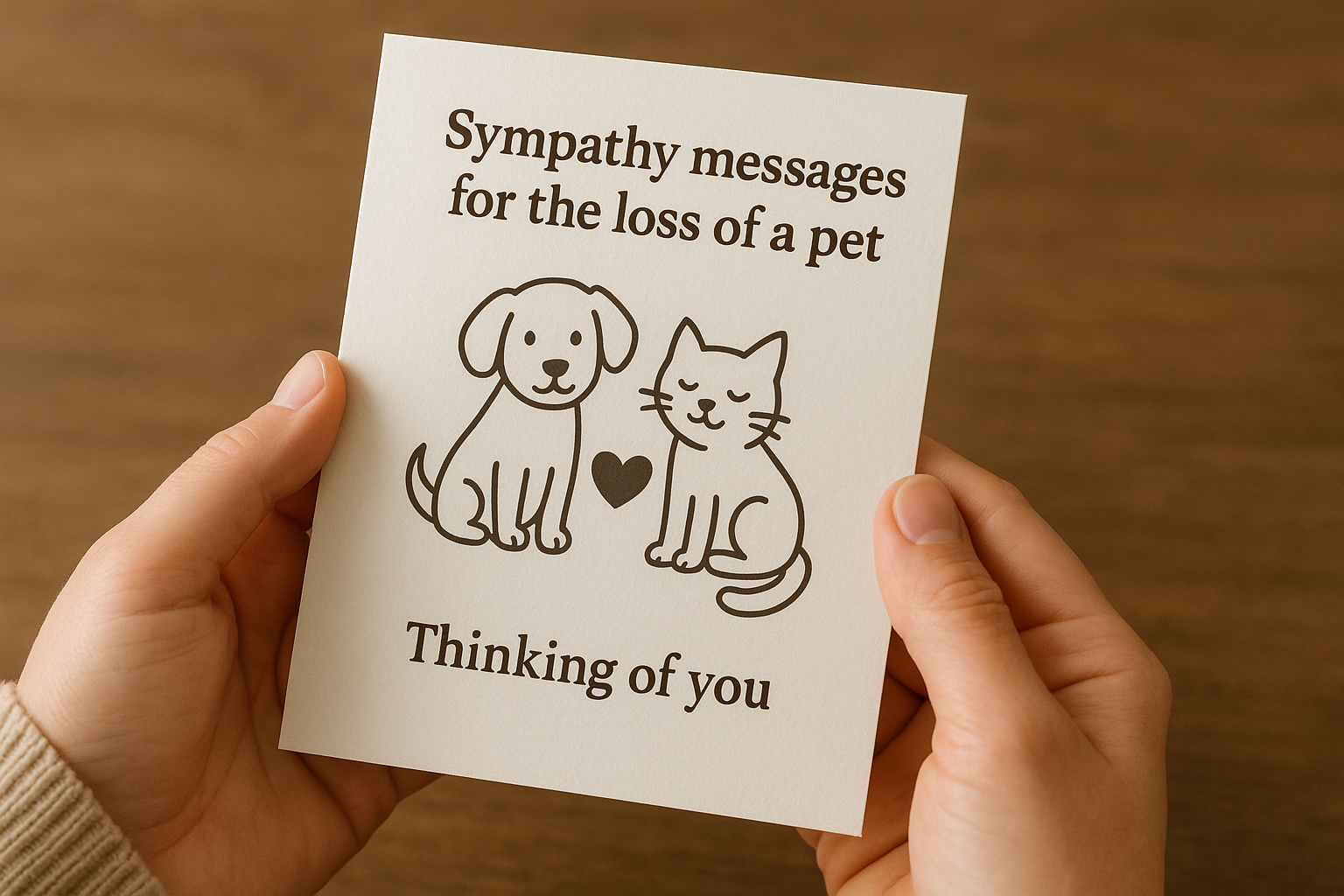
Pet grief still gets dismissed by people who've never loved an animal that way, which makes the right words matter even more. Sympathy messages cards for a pet's death should treat the loss with the same weight you'd give any family member, because for most pet owners, that's exactly what the animal was. Skip any hint of "it was just a dog" and instead honor the years of companionship that ended.
Example sympathy messages
These lines work for dogs, cats, or any animal companion, whether the death came after a long illness or suddenly, and you'll find more dog memorial quotes to honor a beloved pet if you want a line to borrow:
- "Your dog was such a loyal friend to you. I'm so sorry for this loss."
- "Losing a pet means losing a family member. Sending you comfort right now."
- "She gave you so much love every single day. I know how much you'll miss her."
- "Pets leave paw prints on our hearts that never fade. Thinking of you and your family."
- "I'm so sorry about your cat. He was lucky to have you as his person."
A pet's death deserves the same respect as any other family loss.
Who these messages are for
These messages suit anyone grieving a beloved pet, including families with young kids losing their first pet and older adults whose animal companion had been with them for over a decade.
Tips for personalizing your card
Use the pet's actual name instead of just "your pet," and mention a specific habit, like a favorite toy or a spot on the couch. Suggest a lasting option too, since a free pet memorial website lets the whole family add photos and stories whenever they're ready, long after the sympathy card gets put away.
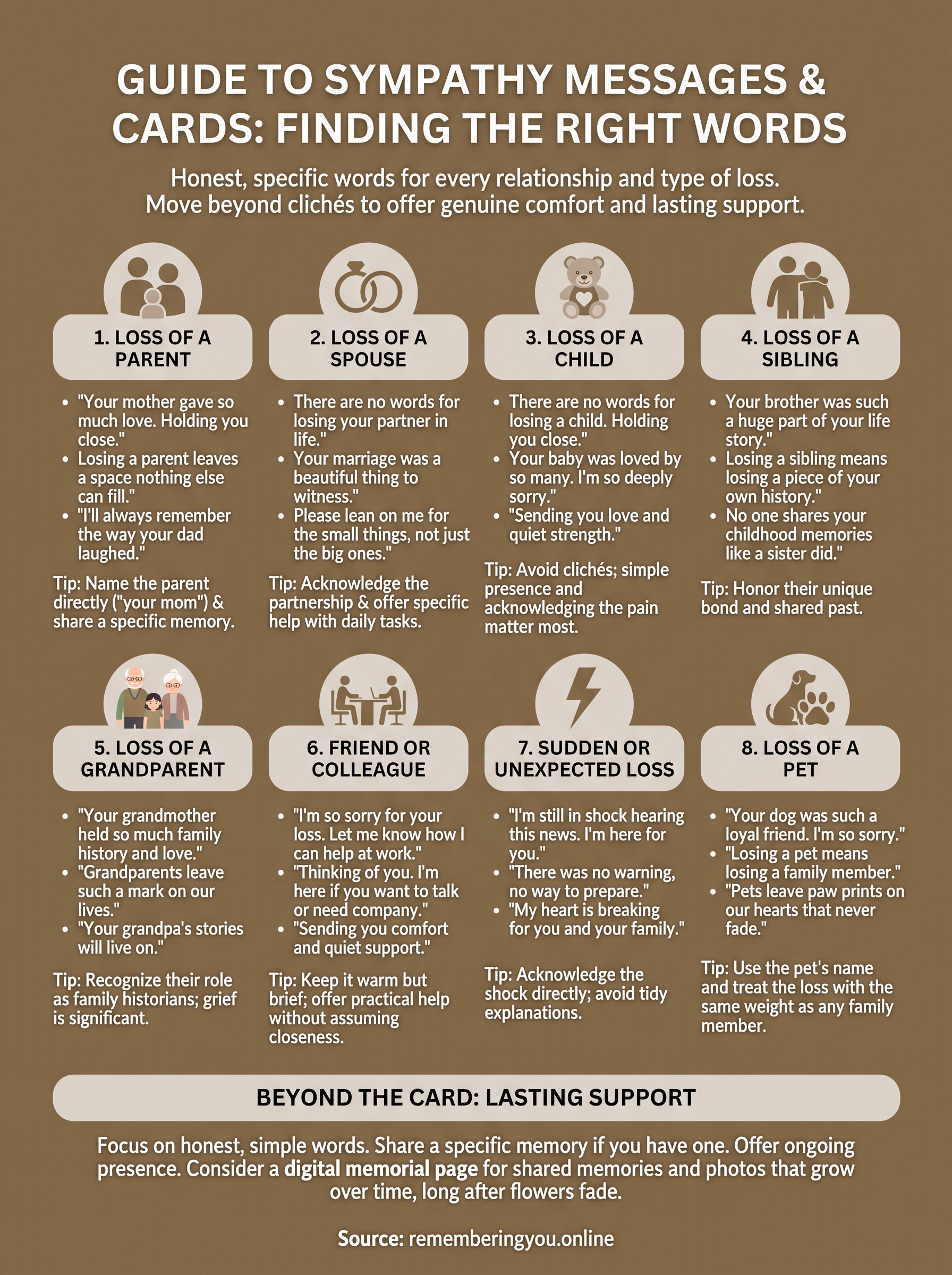
Finding the words that feel right
No single line fixes grief, but the right sympathy messages cards can still tell someone they're not carrying it alone. Pick the words that match your actual relationship with the grieving person, add one specific memory if you have one, and don't worry about sounding perfect. A short, honest sentence beats a polished one that feels borrowed.
Once the card is written and mailed, think about what happens next. Flowers wilt and cards get tucked in drawers, but grief doesn't stop after the funeral. Family scattered across states or countries often want a shared place to keep adding memories, photos, and stories as they come up, not just once. That's where a lasting tribute helps more than another card ever could. If you want to give the family something that grows over time instead of fading, start a free memorial tribute page they can build on together, long after the cards stop arriving.